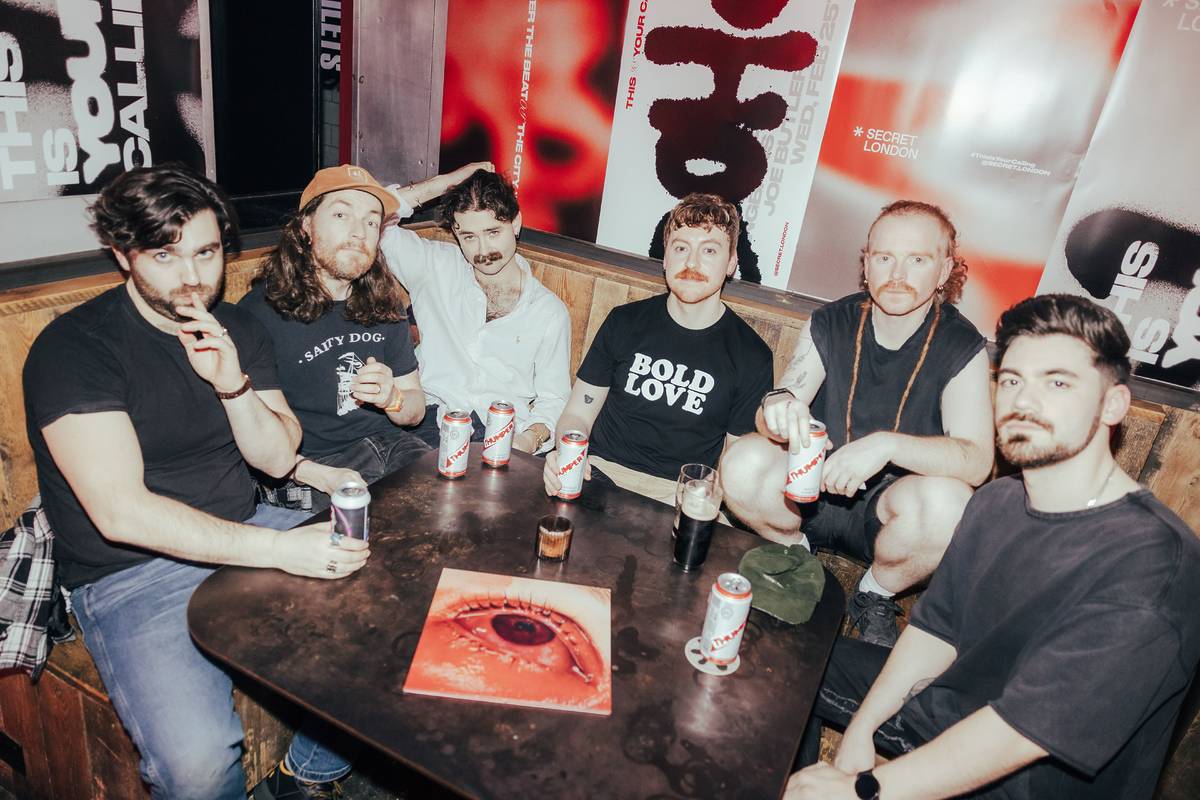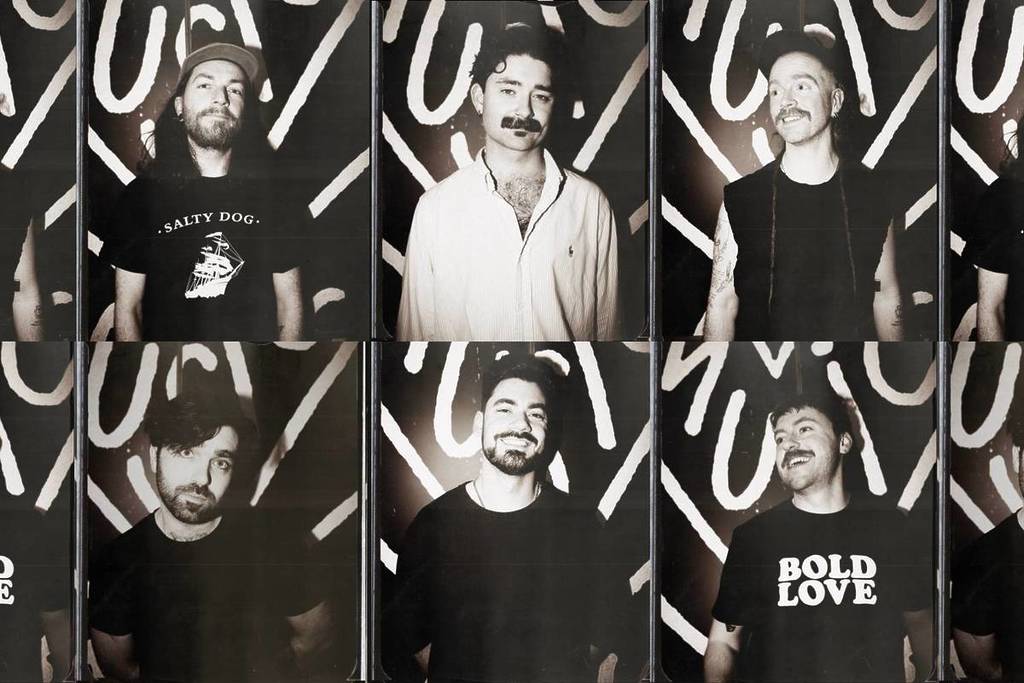
Dublin’s noise‑rock powerhouse THUMPER have built their name on chaos, catharsis, and a double‑drum onslaught that’s equal parts meticulous and pandemonium. What began as a lo‑fi solo project has evolved into one of Ireland’s loudest and most arresting live forces: a six‑piece wall of sound built on feedback, harmony, and a refusal to play anything safe.
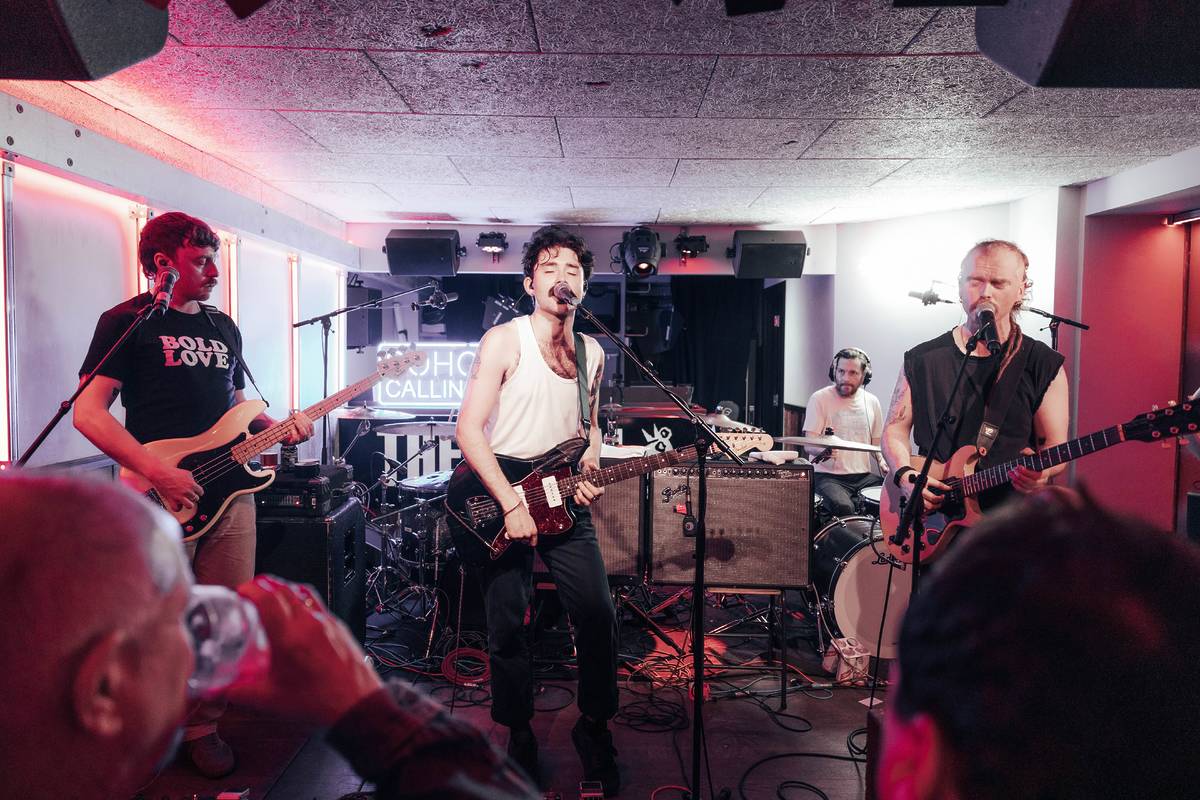
Amid the buzz of Soho Calling at The Social, a night celebrating London’s thriving alternative scene – THUMPER took a moment to sit down and reflect on how far their chaos has carried them. With their new album Sleeping with the Light On, frontman Oisín Leahy Furlong and his bandmates sat with Secret London to reflect on their early DIY days, lessons from Delusions of Grandeur, and how isolation reshaped their sound into something far more introspective.
THUMPER started as a solo project before becoming a six-piece – what was the tipping point where you knew it had to become a full band rather than stay a solo vehicle?
The three THUMPER tapes I put out in the early days were very lo‑fi. They were written quickly and recorded haphazardly in my bedroom or whatever rehearsal spot I was renting. When the project started getting booked for festivals, I surrounded myself with tons of musicians to hide behind.
I kept the recordings and performances intentionally sloppy, very garage‑y in scope because I didn’t feel my musicianship or songwriting could handle scrutiny. I figured if I aimed low, it would always be a success.
Once the lineup solidified, the shared musicianship elevated even the scuzziest of the older material. I’m not sure there was one single moment where we officially anointed THUMPER as a band, but I do remember writing “25” (which ended up on our first album) and realising it was something I couldn’t have achieved alone. It combined all our tastes and instincts, and I had no interest in going backwards after that.
When you think back to the early Dublin days and those first small hometown shows, what do you miss and what are you glad you’ve grown out of?
I miss the venues. There were so many small or mid tier venues that bands could cut their teeth in, or go and be inspired by another local band. We met so many likeminded people there, even venue staff who we still work with today.
Dublin has been slowly eaten up by conglomerates and I’m not sure that places like that exist today. I don’t miss skinny jeans though.
If someone flew into Dublin for one night and wanted to understand the world THUMPER came from, where are you taking them?
The zoo.
Delusions of Grandeur earned you a Choice Prize nomination; did that change how you approached writing the next batch of songs, or did you consciously try to ignore the pressure?
The nomination was a nice surprise, but it also got a lot of eyes on us that had no context for what we were about. The songs on that album purposefully leaned into long form repetition and luxuriated in testing an audience’s stamina for that.
The idea of a band starting with lo-fi tapes and ending up releasing a double record as a debut album, where the final song is 15 minutes long… all of this was sort of funny and perverse to us. That’s why we named it Delusions of Grandeur. So when critics started accusing us of not knowing to craft a short song it did feel like they were missing the point.
That said, it did sort of light something in me where I wanted to prove that I could write some more concise material. And when we decided to go long, we made sure to pepper every section with as many ideas as possible. I guess it was all in service of justifying our own decisions.
That’s a long way of saying – the nomination itself didn’t affect our creative instincts, but the volume of people paying attention probably made us scrutinise ourselves a little more. That’s something that, ironically, I’ve found quite creatively fulfilling. Forming new rules for yourself, and watching yourself make or break them.
Keeping that in mind, can you tell me more about your latest album ‘Sleeping with The Light On’?
I think the biggest shift in this record comes down to perspective. The artwork for our first album is a burning car in a field of flowers, viewed from a distance. Something big, dramatic and broad.
Our new album cover is the opposite – intimate but emotionally ambiguous. I’d like to think our first record is an album of statements, and this one is an album of questions.
I read somewhere that you wrote and recorded this album in isolation. How did that solitude shape the album’s energy compared to the communal chaos of your debut?
Due to covid lockdowns this album was written with just us in a room, vs the previous record where the songs were road tested constantly. The chaos of the live shows had been a secret 7th member of THUMPER that we no longer possessed.
It made the new songs more inward, less chest pounding. We discovered that there is more to intensity than just being the loudest. It’s funny now that we’re playing these songs live – the intentionality of the album is informing our live performances, previously it was the other way around.
I also read that “Middle Management” went through 10 versions over years, even pre-debut; what finally unlocked that 10-minute beast and made it the album centrepiece
I first brought that tune to a different iteration of the band around 2017, and sporadically we’d tackle and abandon it over the years with new line ups. Usually it’s important to me to strike while the iron is hot, to grab a song and nail it down before it flies away. The odd time though, I clock an instinct to just let a song gestate.
That’s true of this song and also The Drip. For Middle Management our ability to compose something that sounds free form but is secretly meticulously structured – that’s something it’s taken years to feel like we’ve mastered. We’ve had many a long song in the past, but in retrospect I think you can see all the ideas nailed together. I hope with this one it’s slightly more seamless.
Singles like “The Drip” and “There Will Be Blood” show new textures – piano intros, post-punk edges; which track do you think best captures the album’s evolution?
Both of those songs are good examples of new textures coming into play, as well as a more precise approach to tension and release. Structurally both songs are kind of bizarre – they masquerade as pop songs but have no chorus, they’re heavy enough to open a pit, but you could also play them on a piano and I think they’d survive the journey. As students of songwriting all of that is exciting to us.
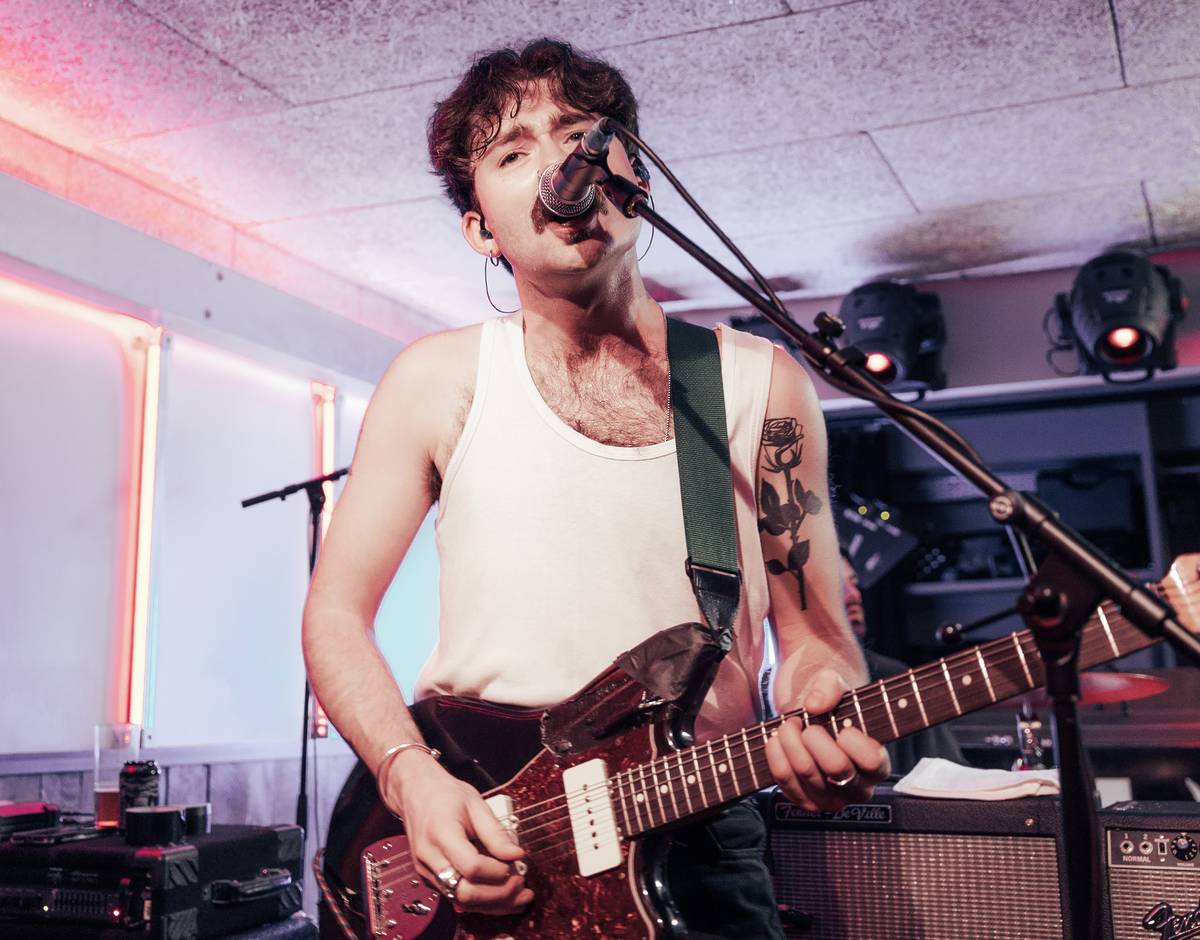
What are the rules of engagement in the rehearsal room with six people in the room – who has right of veto, if anyone?
It’s a pretty fluid process at this stage. I normally bring a song fairly fully formed, sometimes demo’d, and sketch out what I feel the parts should be to the lads. The understanding is usually that they’ll translate my slapdash parts into something more effective, as they’re all much better musicians than me.
Is there a particular festival or city where you felt the crowd “got” THUMPER in a way that surprised you?
We played Haldern Pop festival in Germany in a beyond boiling hot spiegal tent. Our pedals were (literally) exploding from the heat and we performed barely clothed, but that tent was full to the brim the whole time.
After the show some women wanted to buy my rancid, soaked through t-shirt and I knew that we were operating off a similar vibe of weird = good. Still didn’t sell them the shirt though.
With that stereo, layered set‑up, what’s one tiny detail in the live mix you hope fans actually notice?
One element of THUMPER that often goes unnoticed is that we’re frequently singing in four part harmony live. It’s often hidden under walls of noise, but it’s there for our own enjoyment nonetheless.
You’ve toured across Ireland, the UK and Europe and opened for bands like Kasabian and Damien Dempsey; what did you pick up from watching those artists up close every night?
We don’t often do support slots as most touring bands don’t want to deal with our pain-in-the-ass double drum and wall of amps set up. So we immediately have mad respect for anyone that wants us on their bill.
The Kasabian lads were very sound – Serge said we reminded him of Hawkwind. When we meet these acts along the way one thing is abundantly clear – stick to your guns, make art that you like, and don’t second guess yourself. It’s the only way to make a worthwhile career out of this.
What’s the most gloriously shambolic thing that’s gone wrong on stage, and how did you style it out?
I was once offstage during some freak out extended outro to a tune, with my guitar raised above my head, ready to smash it. When I levelled it at the floor somebody in the mosh pit hit me, and the guitar hit my foot full force instead of the ground.
There was no styling out the broken toe that was swelling up inside my shoe, but the photos did paint me as the most dynamic singer of all time, rather than just someone screaming in pain. Plus the singer of the other band on the bill was a certified nurse which saved me a trip to A&E.
Which THUMPER song would you play to your worst enemy, and which to your mum?
The same one? I’d imagine my worst enemy wouldn’t care what song I played, they’d hate it just the same. Spoken from experience? Who’s to say
Dream three‑band bill where THUMPER is in the middle slot – who opens and who closes?
Oh Sees
THUMPER
Charlie’s Angels
I think that last one might have been a movie.