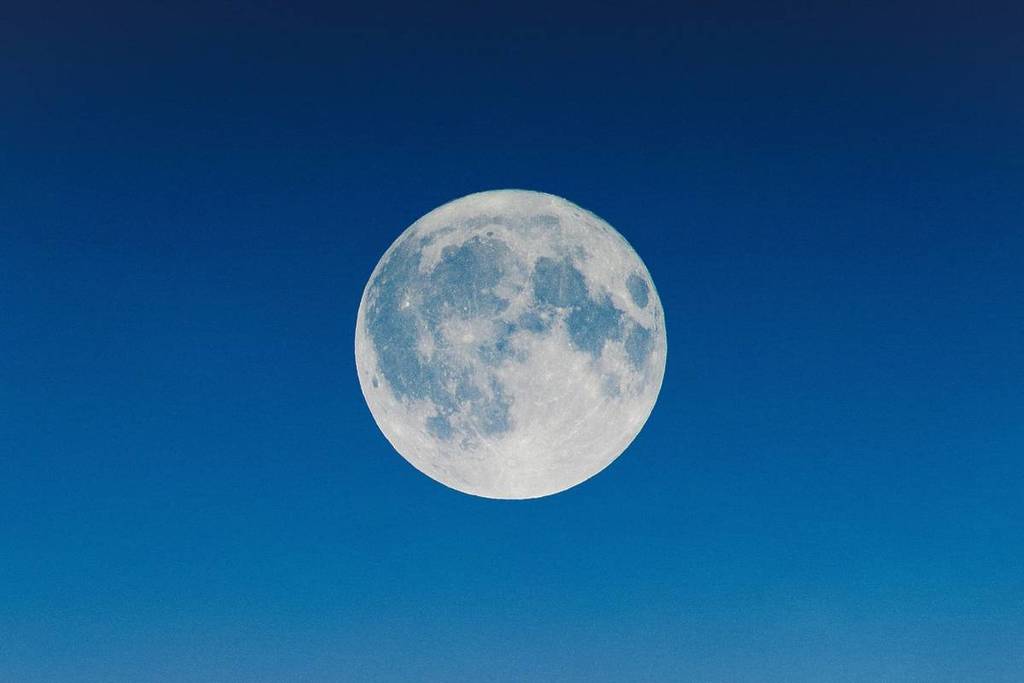

Ever heard of the phrase “once in a blue moon”? Well, fun fact, it is linked to a pretty rare phenomenon that occurs when we experience two full moons in one month.
This May, we are lucky enough to have two full moons lighting up the skies, with the blue moon appearing on 31 May 2026.
How rare is a blue Moon?
Having two full moons in one month is pretty rare, only occurring once every two to three years. However, in 2018, we had an extremely rare occurrence of two blue moons in one year.
We’ve already had a full moon this month with the flower moon peaking on 1 May.
So why do we sometimes get a bonus moon? It’s because the moon phases usually take 29.5 days to complete, meaning 12 cycles take 354 days. So every few years, we get a 13th moon.
The next blue moon is not expected until 31 December 2028.
Why is it called a blue moon?
Despite what the name suggests, it doesn’t come from the blue appearance of the moon. While it’s not clear where the term originally came from, there are a few theories as to where it could have originated.
One such theory suggests it comes from a mispronunciation of an old-timey word that means ‘to betray’, meaning the extra moon is a trick of sorts. Whereas another theory suggests that the slang term meaning “a long time” came first, and farmers then started referring to the rare phenomenon this way.
Full moon schedule for 2026:
Sunday, May 31 – Blue Moon
Monday, June 29 – Strawberry Moon, micromoon
Wednesday, July 29 – Buck Moon
Friday, August 28 – Sturgeon Moon, partial lunar eclipse
Saturday, September 26 – Harvest Moon
Monday, October 26 – Hunter’s Moon
Tuesday, November 24 – Beaver Moon, supermoon
Wednesday, December 23 – Cold Moon, supermoon