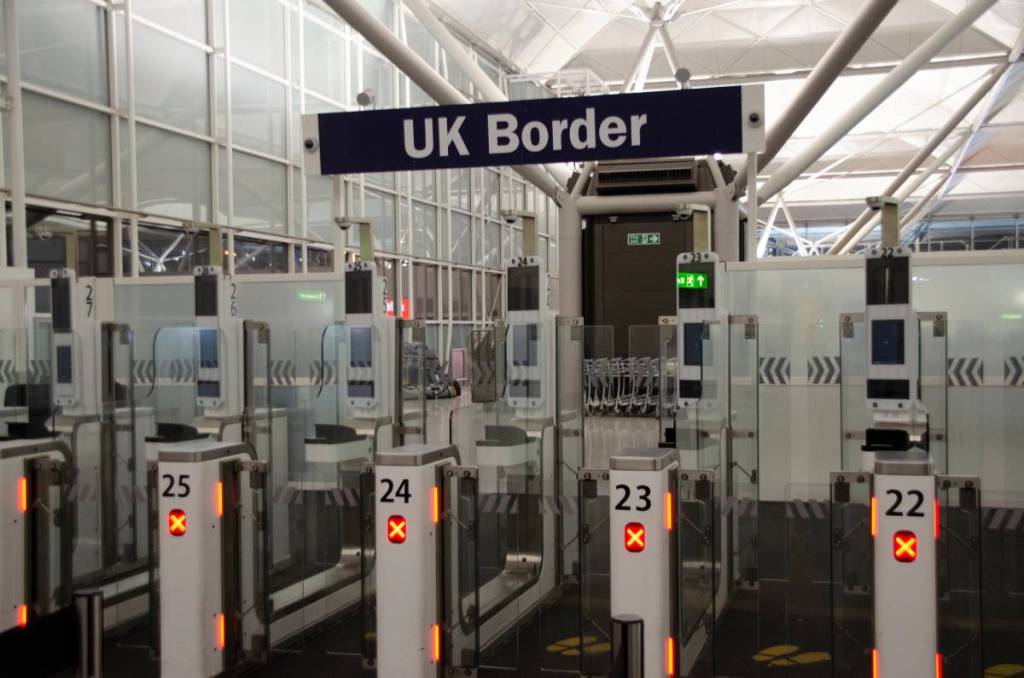

Families heading abroad this summer are set to benefit from a major change at UK airports, as new passport e-gate rules come into force during the peak school holiday getaway.
From July 8, children aged eight and nine are now allowed to use e-gates for the first time, a move designed to speed up border checks and ease congestion at some of the country’s busiest travel hubs.
Previously, only passengers aged 10 and over could use the automated gates, meaning families with younger children were often forced into longer queues at staffed passport control desks.
What the new e-gate rule means
The change, introduced by the Home Office, is expected to allow around 1.5 million additional children to pass through e-gates each year.
E-gates use facial recognition technology to verify a traveller’s identity against their passport photo.
To use them under the new rules, children must:
- Be aged eight or nine
- Be at least 120cm tall (so scanners can detect their face)
- Be travelling with an adult
The update is particularly significant ahead of the summer holidays, when UK airports typically see a surge in family travel.
Border Force has said the expansion will not only improve passenger flow but also allow officers to focus on higher-risk cases.
Full list of UK airports with e-gates
The new rules apply across all 13 UK airports where e-gates are currently in operation. These are:
- Birmingham Airport
- Bristol Airport
- Cardiff Airport
- East Midlands Airport
- Edinburgh Airport
- Glasgow Airport
- London City Airport
- London Gatwick Airport
- London Heathrow Airport
- London Luton Airport
- London Stansted Airport
- Manchester Airport
- Newcastle Airport
Who else can use e-gates
As well as UK passport holders, e-gates are also available to travellers from a range of countries, including:
- EU member states
- Australia, Canada and New Zealand
- Japan, Singapore and South Korea
- Iceland, Liechtenstein, Norway and Switzerland
- The United States
They can also be used by registered traveller service members.
For many families, the change removes one of the more frustrating parts of travelling with younger children, long waits at passport control after a flight.