
Britain is just days away from its most impressive solar eclipse in almost three decades and the latest weather forecast suggests some parts of the country could be treated to clear skies.
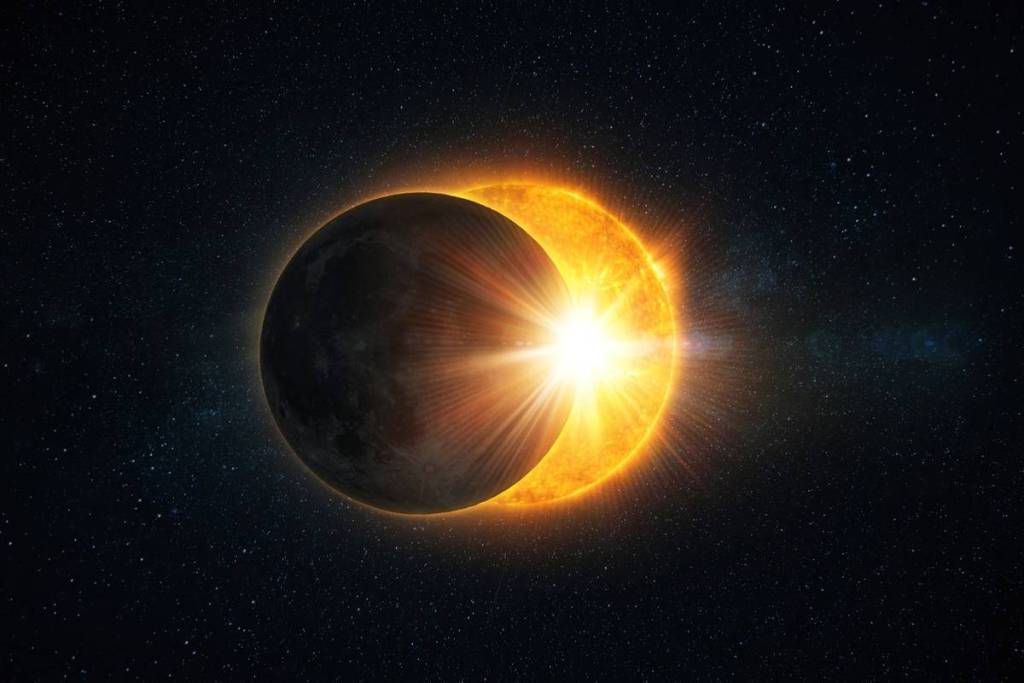
The partial solar eclipse will take place on Wednesday, August 12, when the Moon passes between the Earth and the Sun.
Millions of people a rare chance to witness the UK’s most spectacular partial eclipse since the end of the 1990s
While the eclipse will be total in parts of Spain, northern Portugal and Iceland, viewers in the UK will see the Moon cover between 90 and 96 per cent of the Sun’s disc. It will be the deepest solar eclipse visible from Britain since 1999.
However, the view will depend heavily on the weather. Met Office forecast maps indicate that southern and southeastern areas currently have the best chance of avoiding cloud, while conditions are expected to be more unsettled further north and west.
Where will skies be clearest for the eclipse?
The latest forecast suggests that the further south and east you are, the better the chance of seeing the eclipse unobstructed.
Parts of southern England and southern Wales are currently facing only around a 20 to 30 per cent chance of cloud around the time of the eclipse. In the far south and southeast, that falls to approximately 10 to 20 per cent.
By contrast, cloud could be more likely across northern and western parts of the UK.
The Met Office has indicated an 80 to 90 per cent chance of cloud across central and western Scotland, while Northern Ireland could see a 60 to 70 per cent chance. Northern England is currently forecast to have around a 50 per cent chance of cloud.
The South West is particularly appealing for eclipse watchers, as it is expected to experience the greatest level of obscuration. Cornwall, Devon and the westernmost parts of Pembrokeshire could see between 94 and 96 per cent of the Sun covered by the Moon.
Plymouth is forecast to see approximately 94.66 per cent coverage at around 7.16pm.
That said, the South West’s coastal position means local cloud conditions could still change, and anyone planning to travel should check the forecast again before setting off.
When is the eclipse happening?

The partial eclipse will last for roughly one hour and 50 minutes, although exact timings will vary slightly depending on location.
In London, the Moon is expected to begin crossing the Sun at approximately 6.17pm.
Maximum coverage should occur at around 7.13pm, before the eclipse ends at roughly 8.06pm. Around 91 per cent of the Sun will be obscured in the capital.
The event will be even more dramatic in parts of the South West, while Cardiff is expected to see around 93 per cent coverage.
Viewers in Birmingham, Newcastle, Edinburgh and Inverness will see approximately 90 to 92 per cent of the Sun covered.
The eclipse will also create a noticeable change in the evening light. Even though a narrow crescent of the Sun will remain visible, the sky may take on a dusky appearance as the Moon blocks most of the Sun’s surface.
What if it is cloudy?
Cloudy weather will not necessarily mean the event is completely missed, particularly if breaks develop at the right moment.
However, thick cloud could block the Sun altogether, making the forecast an important consideration for anyone choosing a viewing location.
Forecasts can change in the days and hours before the eclipse, so the Met Office advises checking local conditions regularly.
A location with a slightly lower percentage of eclipse coverage could offer a better experience if it has clearer skies.
The eclipse will be visible across the UK, meaning people do not need to travel to the South West to see it. In some locations, finding an open spot with a clear view towards the western sky may be more useful than chasing the highest possible coverage.
How to watch the solar eclipse safely
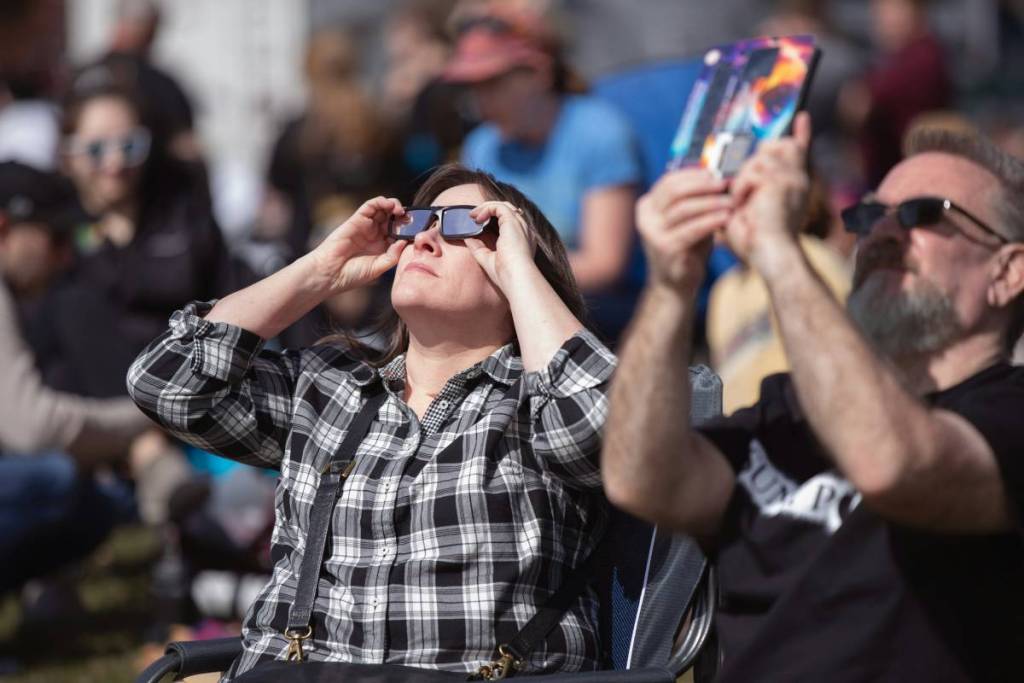
Looking directly at the Sun is unsafe, even when more than 90 per cent of it is hidden. Ordinary sunglasses do not provide adequate protection and should not be used to view the eclipse.
Anyone watching directly should use specialist eclipse glasses or a handheld solar viewer that meets the ISO 12312-2:2015 safety standard.
Alternatively, the eclipse can be viewed indirectly using a pinhole projector or by projecting the Sun’s image onto paper.
The remaining sliver of sunlight will still be intense enough to cause permanent eye damage, and cloud cover does not make looking directly at the Sun safe.