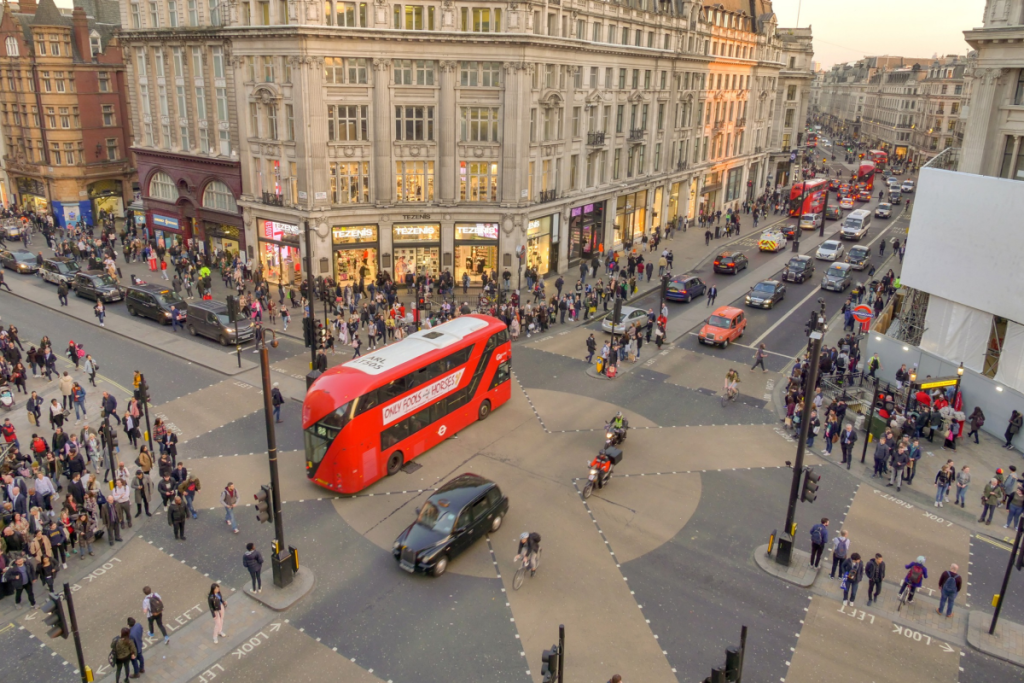

The time has finally come, folks. This week, a big old chunk of what is quite possibly London’s most iconic street is getting the traffic-free treatment. Plans to pedestrianise Oxford Street have been in the pipeline for quite some time now, but those plans are finally hitting the pavement this week – and here’s everything you might need to know about it.
Why is Oxford Street being pedestrianised?
So, first things first, why is Oxford Street closing to vehicles? Well, the impending pedestrianisation comes courtesy of the Mayor of London, Sadiq Khan. He recently set up the Oxford Street Development Corporation, and together they’ve finally managed to get the ball rolling on the ambitious pedestrianisation project. The plans come in a bid to breathe new life into the central London shopping spot – improving air quality, making the Oxford Street experience safer, and transforming the area into a ‘pedestrian plaza’.

When is Oxford Street being pedestrianised?
From October 26, the Oxford Street pedestrianisation project will enter its ‘live testing phase’. This will mark the start of a phased delivery programme to keep disruption to a minimum. Based on real-time feedback and insights, the scheme will then continue to be tested, reviewed, and altered through spring 2027. This first phase will then help shape the plans of a potential permanent pedestrianisaton in the future.
What part of Oxford Street will be closed to vehicles?
The highly-anticipated plans in question will see the 1km stretch of Oxford Street that runs between Orchard Street and Great Portland Street completely closed to vehicular traffic. The soon-to-be traffic-free stretch of street spans from the western end of Selfridges to just past IKEA (yes, that includes that rather hectic junction that connects Oxford Street and Regent Street). Cars, cabs, bikes, and buses will all be banned from driving through this particular section. Emergency service vehicles will be the exception, and service and delivery vehicles will have access between 12am and 7am. All other vehicles will be diverted to neighbouring streets – including a fair few busy bus routes.
Which bus routes will be affected?
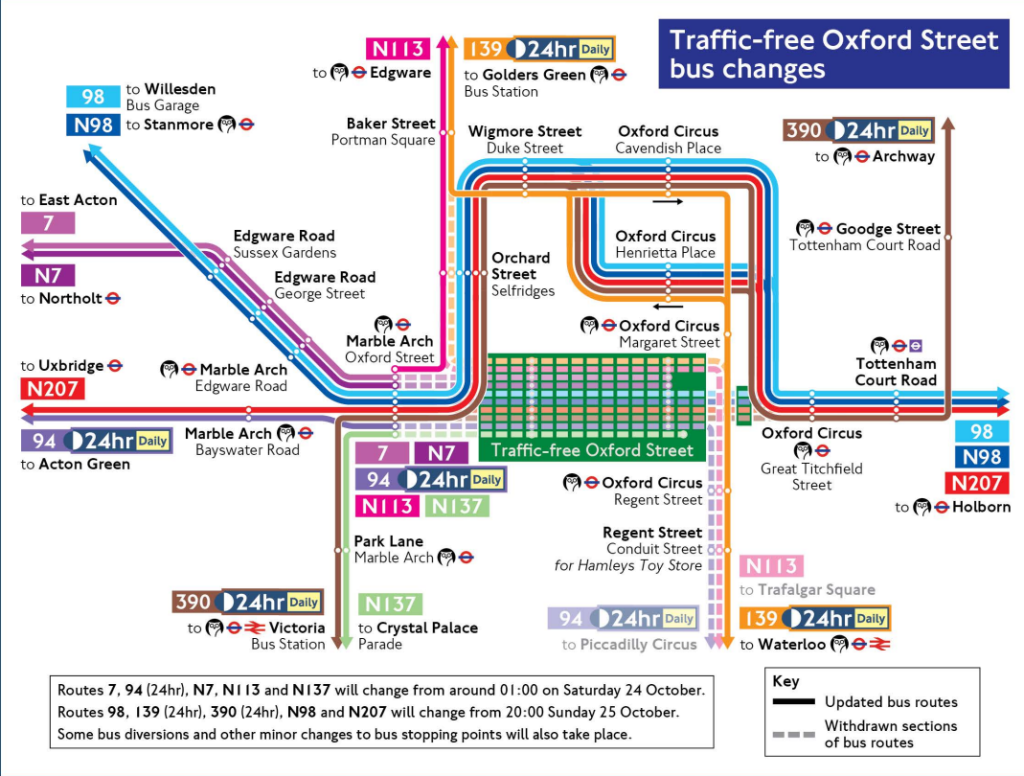
The bus routes that currently serve this specific stretch of Oxford Street will be rerouted or diverted down surrounding streets, with new bus stops having set up shop on the likes of Wigmore Street, Henrietta Place, and Cavendish Place. Diversions and reroutes will begin to come into affect from 1am on October 24. Affected bus routes include the 98, 139, 390, N98, N207, 7, N7, 94, N113, and N137.
From October 26, the best way to reach Oxford Street will be via the Tube. Bond Street, Oxford Circus, Tottenham Court Road, and Marble Arch will all continue operating as normal throughout the first phase of the pedestrianisation.