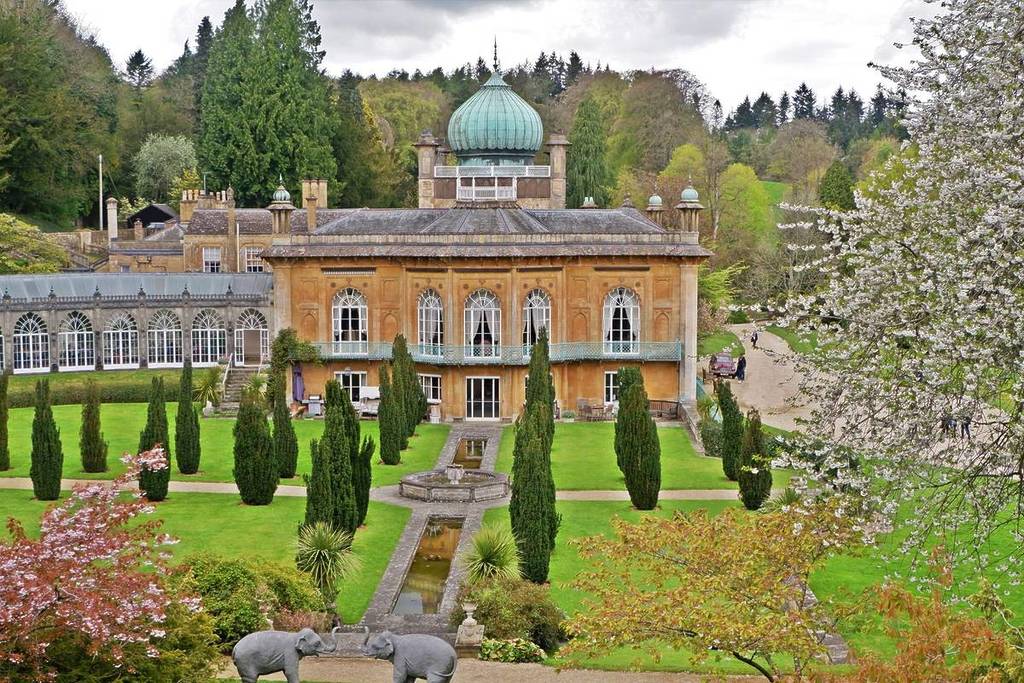

When we think of the Cotswolds, we usually picture honey-coloured stone cottages with wildflowers growing in the garden, but Sezincote brings a little piece of India to the English countryside.
India in the Cotswolds
The most prominent feature of Sezincote House is the copper onion dome that can be spotted when driving up to the property. But what is the reason behind this Indian architecture landing in the heart of the Cotswolds?
The owner of the land on which Sezincote is built had amassed his fortune through the East India Company and commissioned the house to be built to resemble a Moghal-style house from Rajasthan. Another features that give it its signature look is the peacock tail windows.
Fun fact about Colonel John Cockerell, who commissioned this house to be built: he was the grandson of Samuel Pepys, best known for his diaries, which were crucial in painting a picture of the Stuart Restoration period.
Sezincote House also inspired the Royal Pavilion in Brighton. It was after a visit from the Prince Regent in 1807 that encouraged him to change the plans for the building, and designer John Nash incorporated the Indian style of architecture found at Sezincote.
How to get to Sezincote from London
You can get to this stunning building pretty easily from London. Taking an hour and a half, trains from Paddington run to Moreton-in-Marsh, which is only a 7-minute drive or bus ride from Sezincote. If you were to drive the whole way, it’d take around two hours, depending on which part of London you’re coming from.
Sezincote House, Gardens and Orangery Tea Room are now open for the season, after being closed from November to February. You can visit on Wednesdays, Thursdays and Fridays, as well as Bank Holiday Mondays, from 11am to 5pm. You can also book house tours through the official website.
Adult tickets cost £9 for the garden and £15 for the house.