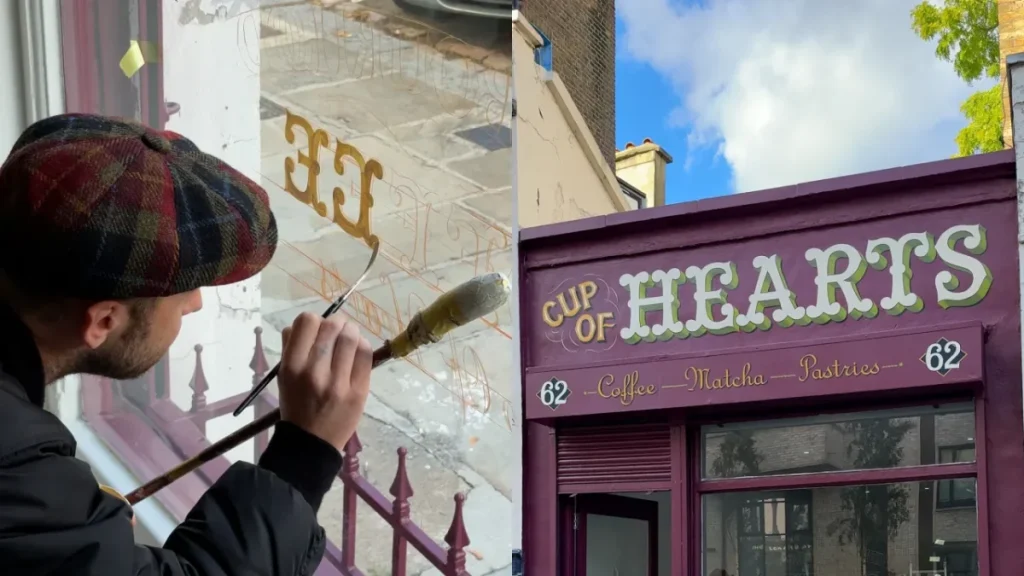

For the past eight years, signwriter Alex Rayment has been hand-painting shopfronts across London, slowly changing the city’s aesthetic back to a more old-timey feel one brushstroke at a time.
Rayment Signs has completed upwards of a thousand traditional signs for businesses ranging from tattoo parlours to pizzerias, pushing back against a growing trend of computer-generated storefronts and restoring a bit of character back into the city.
From pub chalkboards to storefronts
Alex began his journey into sign painting through an early interest in calligraphy. While working in an art shop, he started picking up pens to practice his lettering. This practice led to producing chalkboards for local pubs, and pub managers soon began asking him to tackle their exterior shopfronts.
Despite initially feeling unsure, he developed his skills into a full-time trade. Today, crafting almost perfect lettering from scratch takes him about a full day for each storefront.
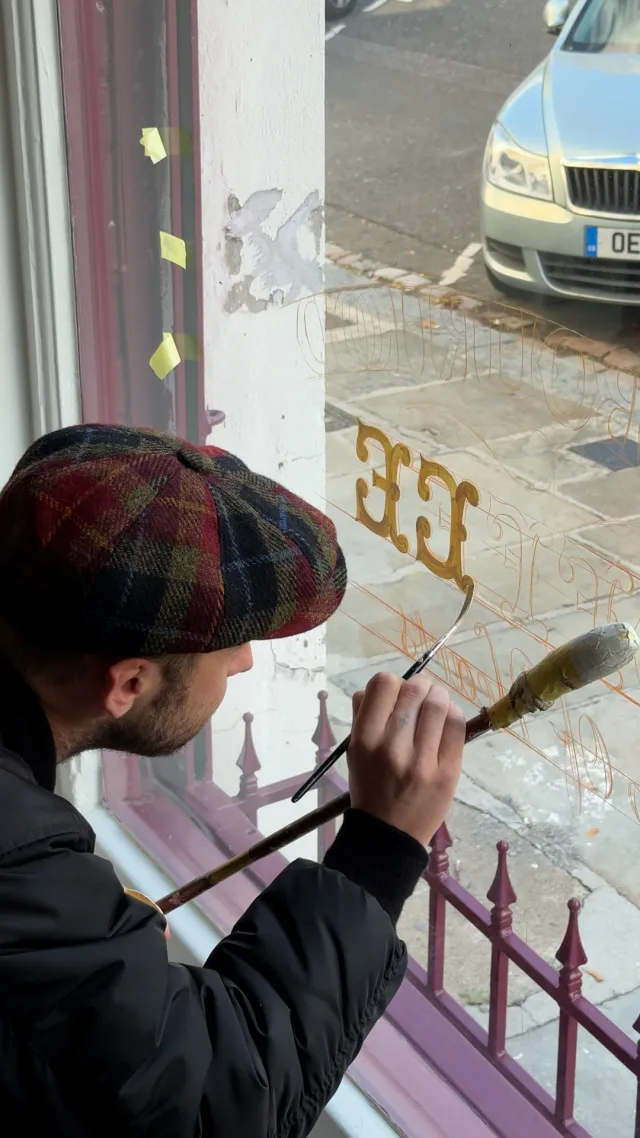
His most important tool is the traditional signwriter’s mahl stick. The tool braces against the window or wall, steadying his hand and allowing him to paint intricate designs directly onto the glass without touching or smudging the work surface- clever, eh?
A push against artificial intelligence
You might have noticed that AI-generated art has become more common and Alex believes there is a stark contrast in quality on the high street. When we spoke to him, he described AI-designed signs as having a rubbery, fake feel, noting that they fail to replicate the texture and character of physical paint.
But the good news is there is a resurgence of his trade, which shows a growing demand from independent businesses for original, handmade craftsmanship over standard typed fonts.
Alex’s hand-painted lettering now marks the entrances of numerous local spots, including the Leather Lane Tattoo Parlour, Cup of Hearts cafe, and The Railway Tavern.