
London Museum will open a network of long-lost underground vaults beneath its new Smithfield home with a free, immersive exhibition that brings the first 50 years of Roman London to life.
Titled Londinium: the making of a Roman city, the spring 2027 show will use sensory-rich storytelling and unseen objects from the Bloomberg Collection to introduce visitors to the capital’s earliest inhabitants.
A new cultural space beneath Smithfield bringing the first 50 years of Roman London to life
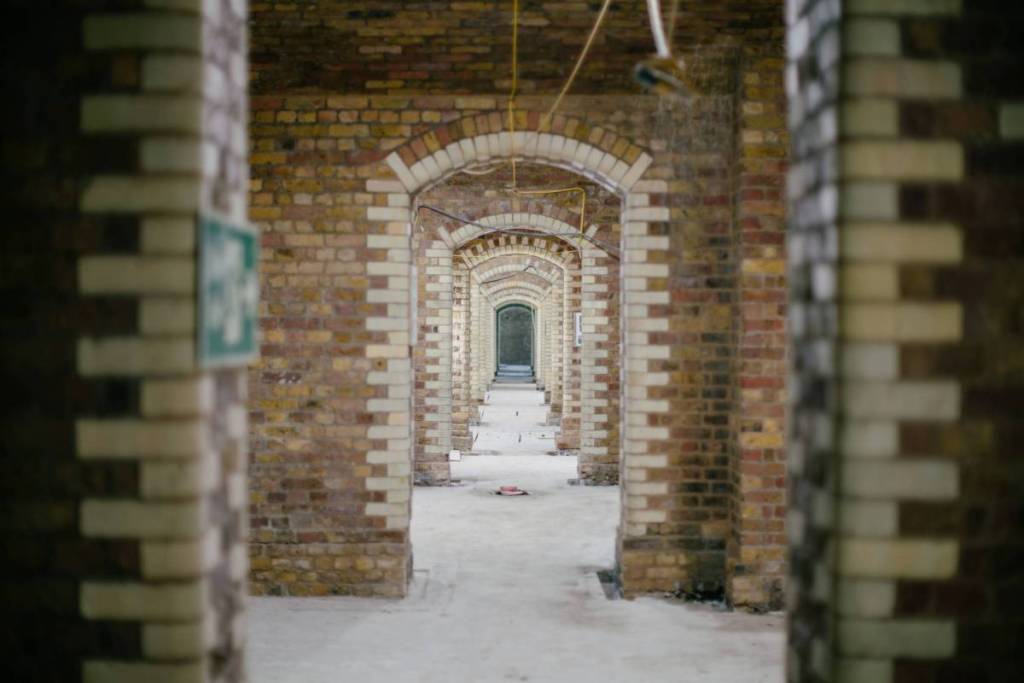
The exhibition marks the first public use of an 800 sqm subterranean network rediscovered in 2019, when builders broke through a wall during the decade-long renovation of the Victorian General Market.
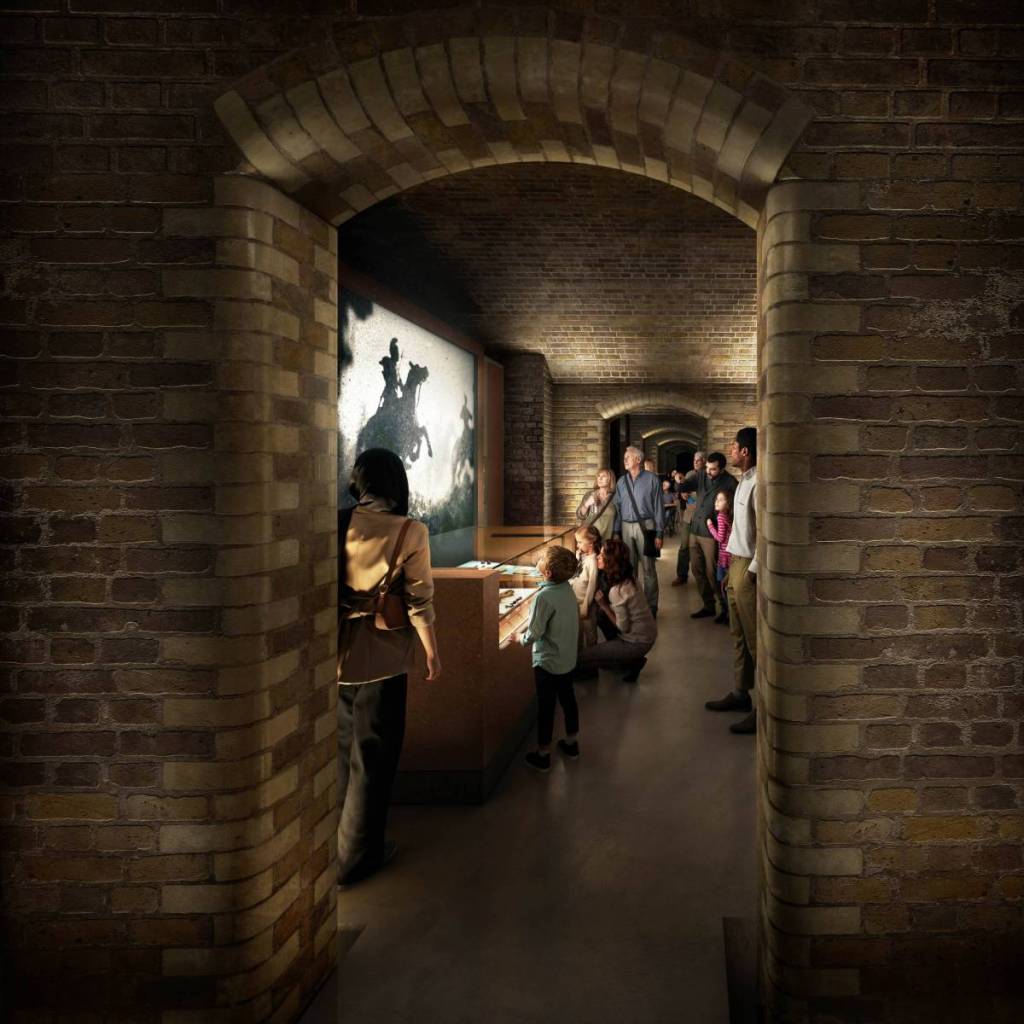
Once used for storage by the market and nearby railway, the vaults have been transformed into a dramatic, atmospheric setting for displays and experiences.
Sharon Ament, director of London Museum, said the team recognised the vaults’ “specific, evocative, mysterious” potential as soon as they were found, and wanted their first use to tell the story of the Londoners who created Londinium.
Londinium: the making of a Roman city has been created with experience design agency Journey, known for work on Lightroom, the National Theatre’s War Horse and the London 2012 Olympic Opening Ceremony.
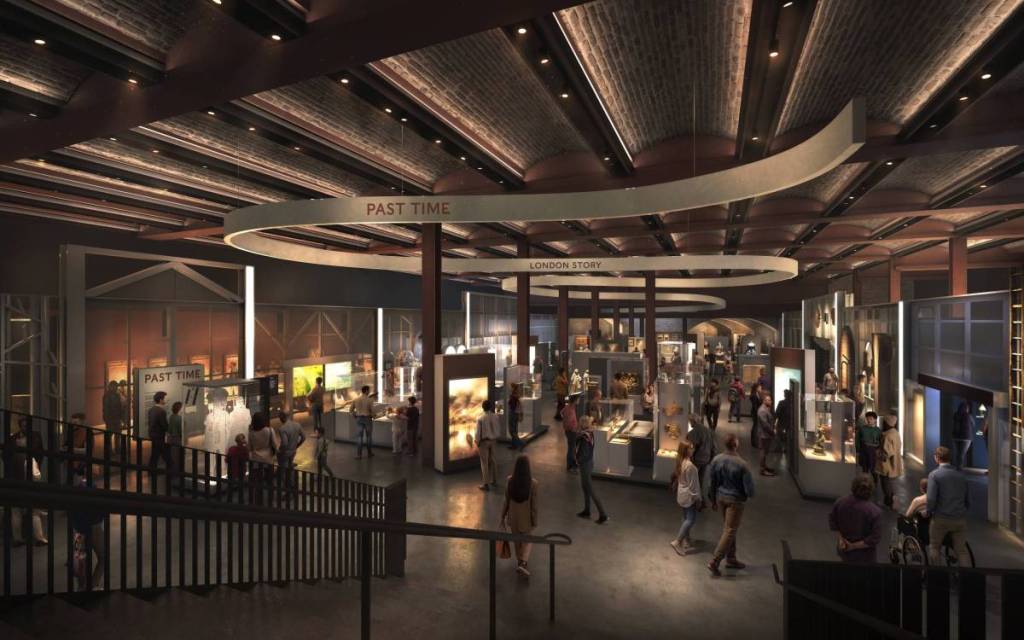
The exhibition will combine dynamic projection, animation and spatial soundscapes to transport visitors into the turbulent early decades of Roman London, a frontier settlement of trade, conflict and opportunity.
More than a decade of research into the Bloomberg Collection underpins the narrative, which imagines the “petty arguments, whispered gossip and business dealings” of ordinary people as the site shifted from rural landscape to thriving urban centre.
Featuring 14,000 significant finds from the Bloomberg Collection
At the heart of the exhibition are previously unseen objects from the world-renowned Bloomberg Collection of Roman artefacts, unearthed during excavations for Bloomberg’s European headquarters between 2012 and 2014. The trove of more than 14,000 significant finds was gifted to London Museum by Bloomberg Philanthropies in 2025 and represents the largest assemblage of small finds ever recovered from a single archaeological excavation in London.
Key highlights going on display for the first time include:
- Examples from Britain’s most important collection of Roman wax writing tablets, etched with London’s earliest surviving voices
- An infant’s feeding bottle, offering rare insight into childcare and family life
- A coin from the reign of Emperor Nero, illustrating how quickly Londinium became connected to the Roman Empire
- Britain’s earliest known example of Eurasian cockroach eggs, discovered inside a Roman bakery oven
Jackie Keily, lead curator of Londinium, said the waterlogged soil had preserved artefacts that would otherwise have been lost, allowing the team to “picture the intimate and everyday experiences of Londinium’s ancient inhabitants” – a time of “loss, upheaval and hardship but also hope, opportunity and new beginnings”.
Part of a wider Roman story at London Museum
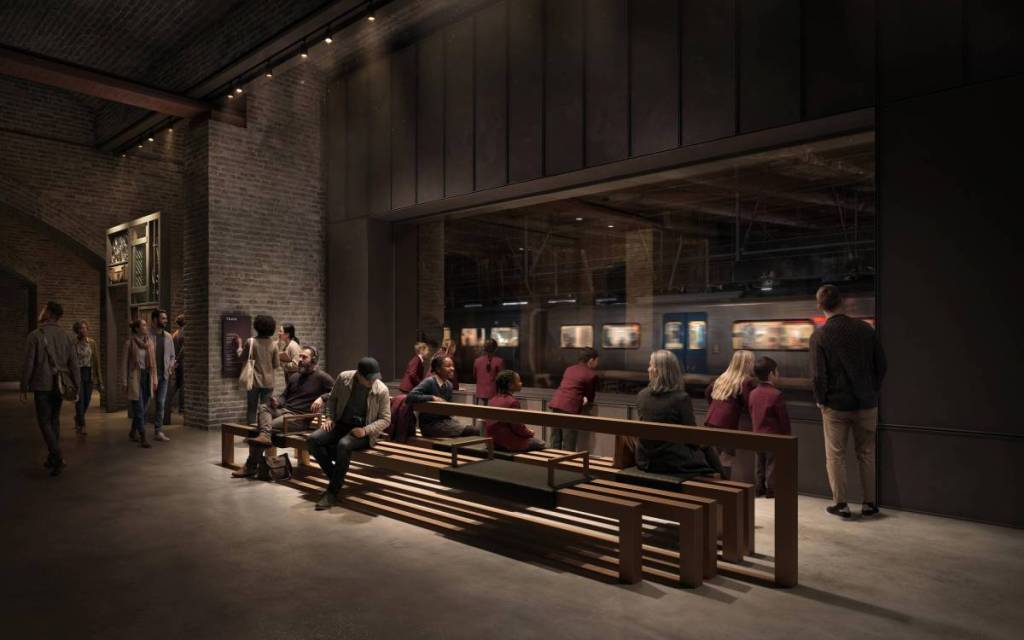
Londinium: the making of a Roman city will sit alongside a broader narrative about Roman London in the museum’s permanent galleries, which tell the city’s story from its earliest prehistoric inhabitants through transformative events such as the Great Fire, the Blitz and the London 2012 Olympic and Paralympic Games.
Many of the vault galleries are situated at roughly Roman street level, a happy coincidence that deepens the sense of stepping back into the ancient city.
When will London Museum open to the public?
London Museum opens to the public in its new Smithfield home on 28 November 2026, occupying the restored Victorian General Market.
Londinium: the making of a Roman city will open in the underground vaults in spring 2027 and will be free to visit.
Further insights from archaeologists, curators and academics studying the collection will be available via Bloomberg Connects, the free arts and culture app.
For anyone interested in London’s origins, the vaults promise a rare combination: authentic Roman artefacts, cutting-edge immersive design and a genuinely mysterious, newly opened space beneath one of the city’s most historic markets.