
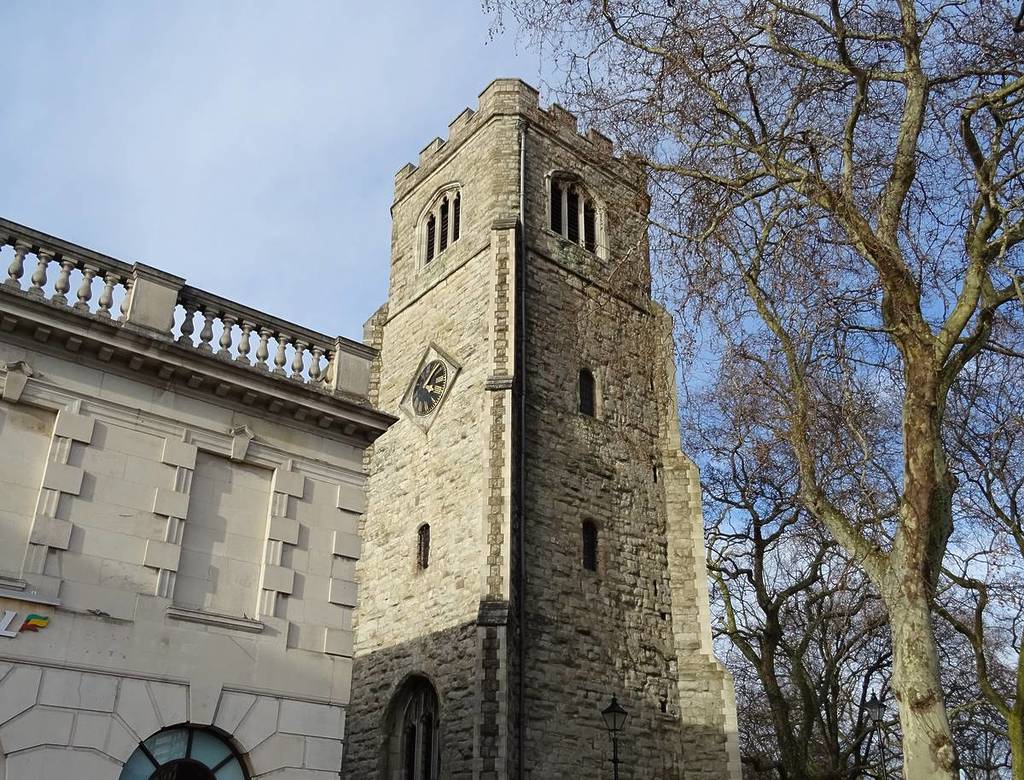
Hackney’s humble beginnings are a far cry from the borough of hipsters and high-rise buildings that we know today. Dating back to the Saxon times, the east London locale was once an area primarily made up of fields and farmland. And whilst a lot of Hackney‘s lengthy past hasn’t survived to tell the tale, certain spots have truly stood the test of time. One of which is St Augustine’s Tower; a historic gem that just so happens to be the oldest building in Hackney.
The history of St Augustine’s Tower
St Augustine’s Tower is all that remains of the ancient church of St Augustine, which was built towards the end of the 13th century. The tower was constructed as part of the church’s refurbishment in the early 16th century, and – unlike many others of its kind – was built as both a clocktower and a belltower.
Hackney’s population grew substantially throughout the following centuries, and by the late 1700s, St Augustine’s church was far too small for the expanding congregation. In 1790, the Vestry was granted permission to build a bigger church. In 1797, St John-at-Hackney set up shop. And soon after, St Augustine’s was demolished. Well, most of it was. The tower was left standing, and is still proudly perched in the heart of Hackney to this very day.
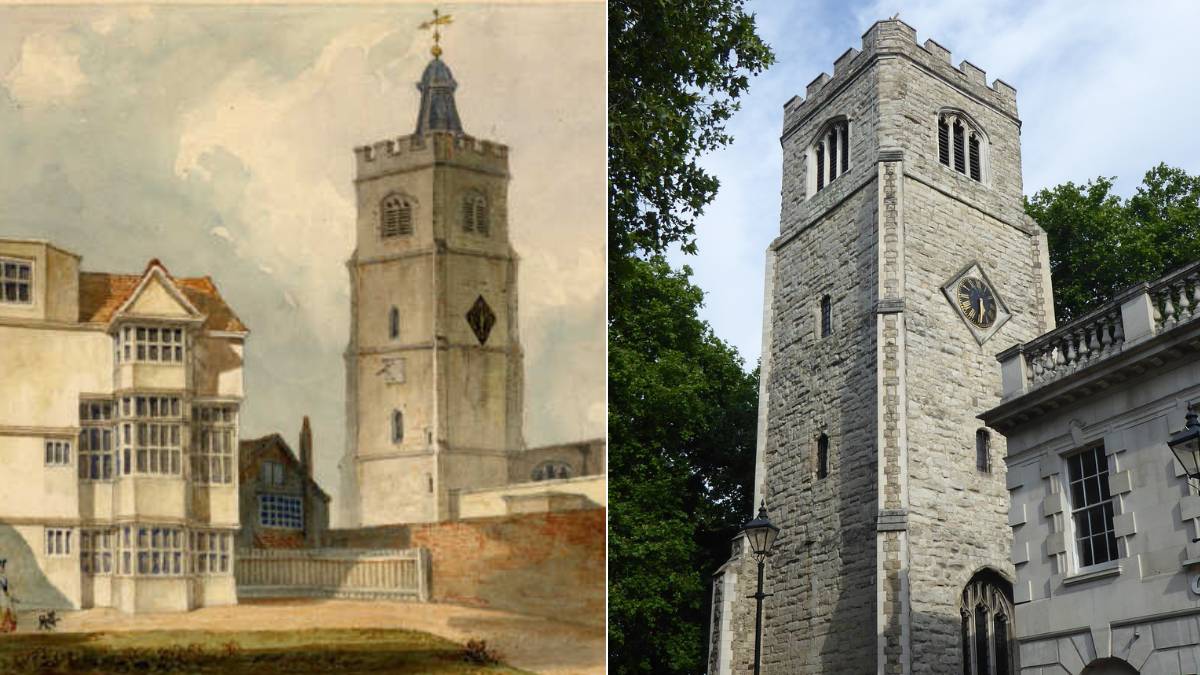
The medieval church tower is now a Grade I listed building, spanning four floors, connected by a spiral stone staircase. The legendary landmark still boasts its fully-functional 16th century clock, the workings of which can be seen from the buildings exterior. Hackney Historic Buildings Trust has been responsible for the tower since the 1990s, and has raised substantial funding to care for it over the years. On rare occasions, visitors can now step inside the ancient relic, ascend the winding staircase, and see for themselves the inner workings of the historic clock.
Visiting St Augustine’s Tower
On the last Sunday of every month, St Augustine’s Tower opens its creaky doors to the public between 2pm and 4.30pm – and lucky Londoners can head inside, without having to pay a penny. Visitors can get up-close-and-personal with the clock and the bell, learn about the buildings fascinating history, and even climb to the very top of the tower to soak up some sweeping views of the city from its rooftop.
Find out more about St Augustine’s Tower and plan your visit here.