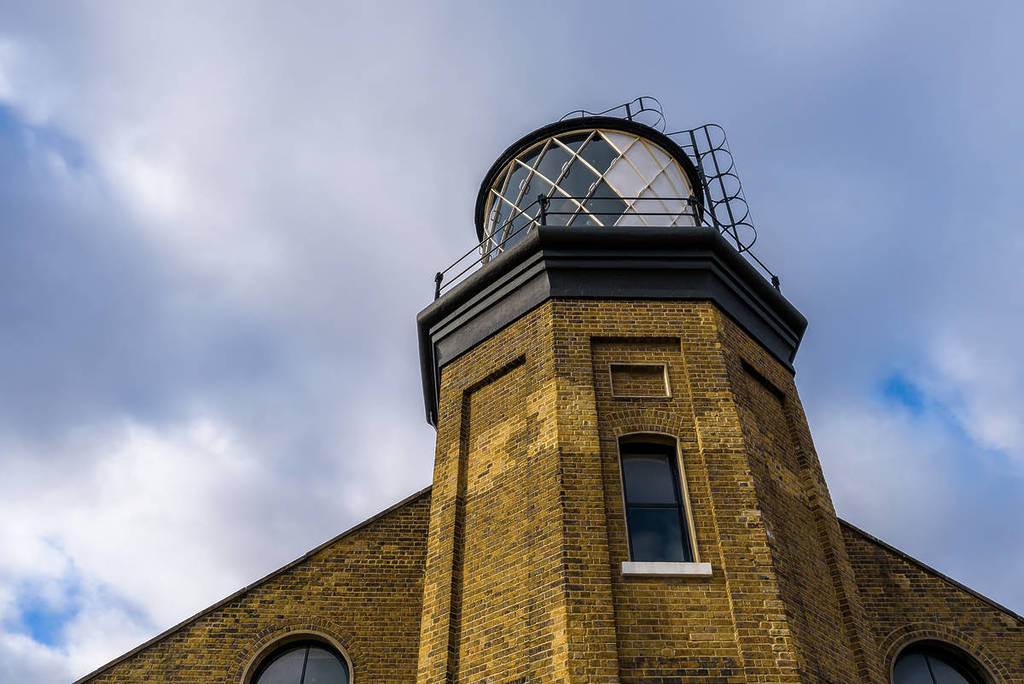

London is a city with absolute boatloads of maritime history. And it makes sense, given it has an important waterway like the Thames running through it. You’ll find evidence of London’s maritime past everywhere, from historic ships to warehouses that now serve as luxury apartments. But over at Docklands, you can find a rather more concrete example of London’s water-y history. Here, at Trinity Buoy Wharf, is London’s only remaining lighthouse.
Now, Trinity Buoy Wharf is itself an already fascinating place. But the Experimental Lighthouse (or the old Bow Creek Lighthouse as it’s sometimes known) has a particularly wonderful story. It’s the only lighthouse in all of London. But here’s the catch: it never even functioned as a normal lighthouse! What I mean by that is, it “was never used to aid navigation on the Thames”.
Instead, the lighthouse was home to all manner of invention, experimentation, and even music. Oh, and did we mention it’s FREE to visit?!
The Experimental Lighthouse
The Experimental Lighthouse was built back in 1864, and was constructed specifically to “experiment and develop lighting equipment for the Trinity House network of lighthouses, lightships and buoys”. Crucially, it was a place for testing electricity’s role in lighthouse technology, measuring the effectiveness and power of electric lighting and equipment.
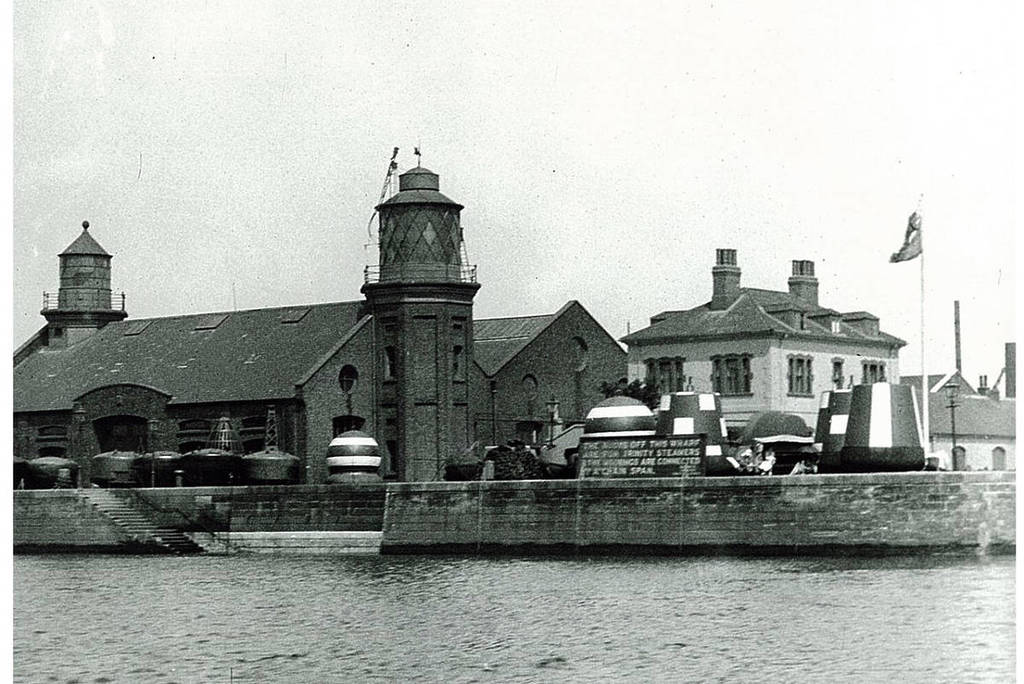
At one point, it was one of two lighthouses on the wharf, joining an earlier example built in 1854. Sadly, this first lighthouse was demolished in the 1920s. (You can see it on the left of the building in the photo below.)
It was at the Experimental Lighthouse that scientist Michael Faraday experimented with optical equipment and lenses. Through his work, he was able to solve a number of issues that affected the amount of light the lighthouses could produce.
Honouring his work, you’ll find a small museum dedicated to Faraday and the Faraday Effect at the base of the lighthouse. In its current guise, you can climb the inside of the lighthouse and look out at a unique view of the Thames and the city.
The lighthouse also provided a resource where lighthouse personnel could be trained. And as if that wasn’t enough, the building is also home to Longplayer – a one-thousand-year-long musical composition.
Longplayer
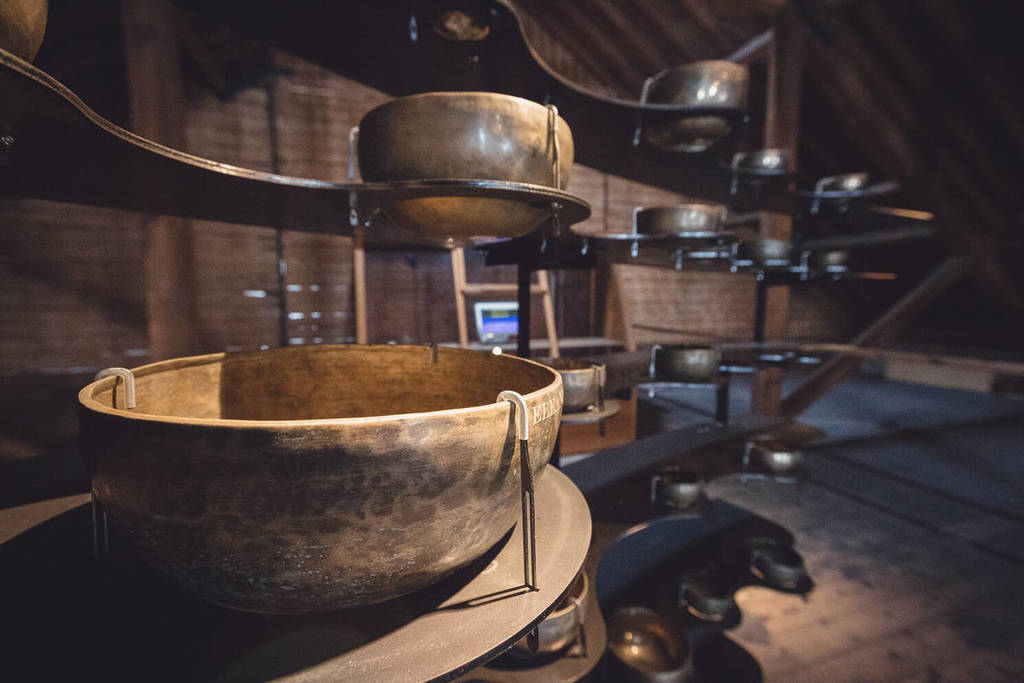
Longplayer is a strange phenomenon, housed within the Experimental Lighthouse. It’s a piece of history, a piece of art, and it’s a sort of live musical performance. Sort of.
Longplayer is a musical composition that was written for singing bowls and is expected to continue playing for thousands of years into the future. The piece started playing at midnight on December 31, 1999. This performance will finish in the very last moments of the year 2999. It will then begin again, to play for another 1,000 years.
Visitors can hear the piece playing in the lighthouse when they visit.
Trinity Buoy Wharf
Outside of hosting the Experimental Lighthouse, the Trinity Buoy Wharf is “a place devoted to creative and arts activity on the River Thames in London’s Docklands.” It’s a stunning place that has been transformed from a derelict site into a space for hundreds of creatives.
The area is home to everything from a sculpture park to event venues, unique architecture, schools, restaurants, and much more. Just be sure you don’t get lost while wandering around. The lighthouse isn’t much help for guiding seafarers London explorers home!
⚓ Trinity Buoy Wharf is open to the public every day, apart from Christmas Day. Find out more here.
💡 The Experimental Lighthouse is open every Saturday and Sunday, and is free to visit. Find out more here.
🚇 The nearest station is Canning Town.