
Beneath a quiet corner of Rotherhithe, just 45 seconds from the Overground station, lies one of London’s most extraordinary forgotten spaces: the vast brick shaft that once carried Victorian crowds down into the world’s first underwater tunnel.
Today, it forms the dramatic centrepiece of the Brunel Museum and you can stand inside it!
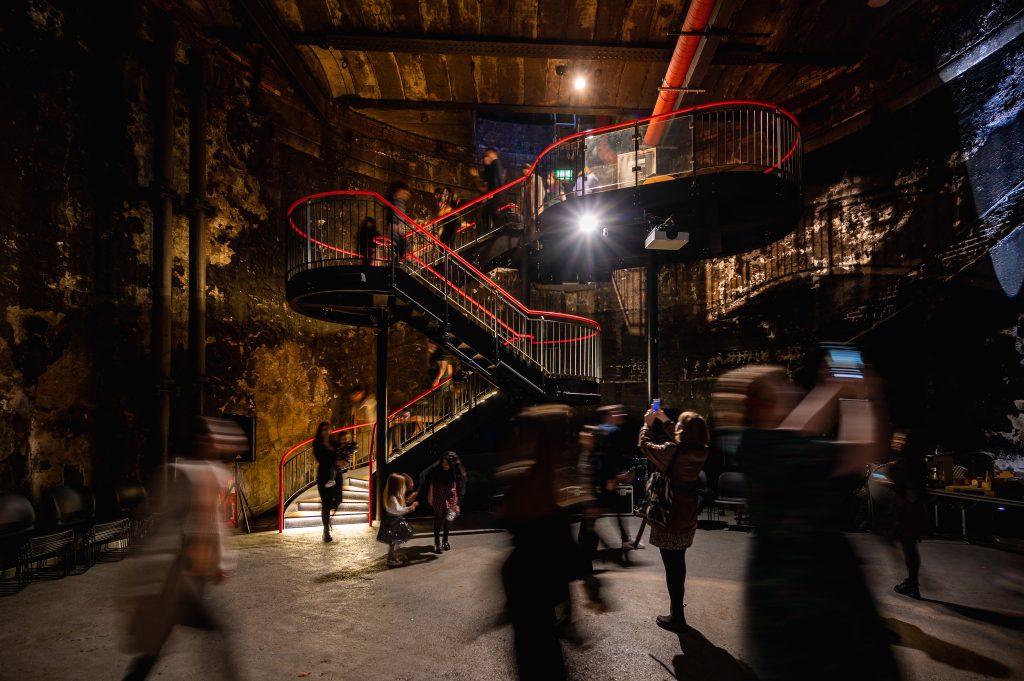
The Tunnel Shaft is easy to miss from the street. But descend its modern staircase and you enter a 10-metre-high, Grade II*-listed chamber, roughly 50ft wide and 50ft deep, its smoke-blackened walls a reminder of the steam trains that later thundered through the tunnel below.
The world’s first underwater tunnel is right here in London
The shaft was where work began on the Thames Tunnel in March 1825. Engineers built a 50ft-wide iron hoop on the ground, laid brickwork over it and let the enormous structure sink gradually into the earth, a few inches each day, until it reached the depth needed to start tunnelling beneath the river.
The tunnel itself was the brainchild of French-born engineer Marc Brunel, with his son Isambard Kingdom Brunel working as resident engineer.
Using an early tunnelling shield, they created a 365-metre passage between Rotherhithe and Wapping: the first tunnel completed beneath a navigable waterway.
It was a perilous achievement. After 18 years of delays, danger and financial trouble, the Thames Tunnel finally opened to the public on 25 March 1843.
London’s underground pedestrian crossing
Although it was originally intended for cargo, the tunnel opened as a pedestrian crossing and Londoners could not get enough of it. In its first ten weeks, around one million people visited, roughly half of the capital’s population at the time.
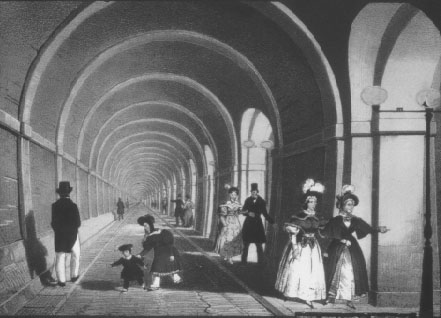
Victorians treated it as a destination in its own right. There were underground fairs and banquets, while the Brunels staged what the museum describes as the world’s first underwater concert party in 1827. Contemporaries were so impressed that the tunnel was hailed as the “Eighth Wonder of the World”.
The shaft became the tunnel’s Grand Entrance Hall, with two wooden staircases leading visitors down to the walkway. Traces of those original staircases can still be spotted today.
The Thames Tunnel is the oldest part of London’s underground transport network
The tunnel’s moment as a fashionable promenade did not last. By the 1860s it had been sold for railway use, and in 1869 trains began running through it; the shaft was repurposed as a ventilation shaft for the steam locomotives below.
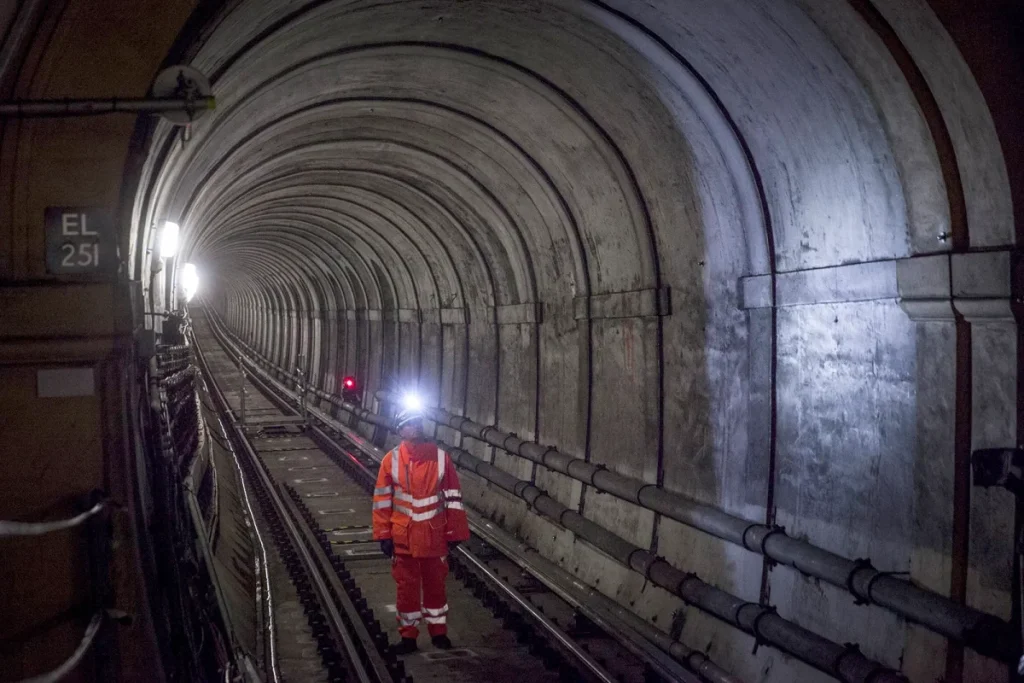
That railway legacy is still very much alive. The Thames Tunnel now carries London Overground’s Windrush Line between Rotherhithe and Wapping, making it the oldest part of London’s underground transport network.
Visitors to the shaft can often hear and feel trains rumbling directly beneath their feet.
During the Second World War, a metal roof was added to conceal the lights from passing trains from the Luftwaffe.
In 2011, a concrete floor was installed, allowing the museum to open the chamber to the public for the first time in around 150 years.
Visiting the Brunel Museum
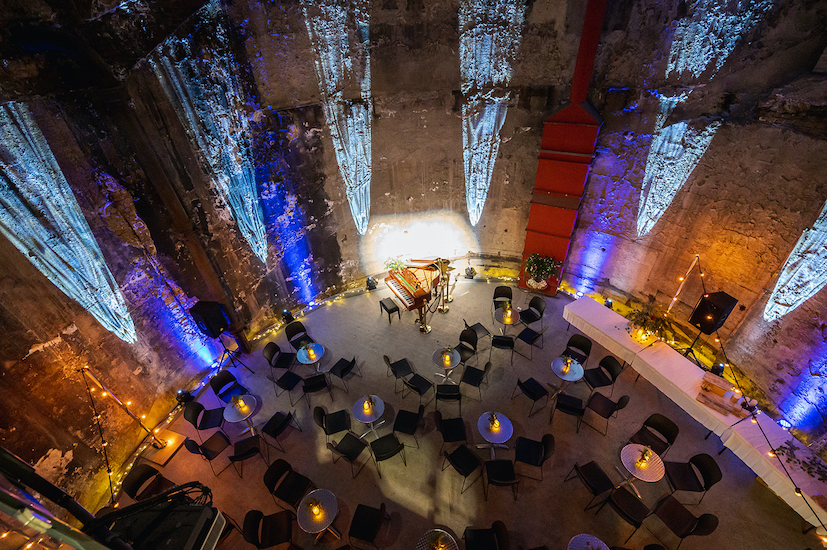
The Brunel Museum is split across two buildings: the Tunnel Shaft and the nearby Engine House, which houses the main exhibition on the tunnel and the Brunel family.
A visit takes around 45 minutes, with tickets including access to both spaces.
It is no longer only a museum exhibit. The chamber hosts concerts, weddings, parties and other events, while a roof garden sits above it, an unexpected green escape atop a piece of engineering history.
Plan your visit
The museum is at Railway Avenue, Rotherhithe, SE16 4LF, immediately behind Rotherhithe Overground station. Canada Water is around a seven-minute walk away, and arriving from Wapping on the Windrush Line means travelling through the historic Thames Tunnel itself.