Tucked away beneath the serene streets of a rather modest market town near London is one of the UK’s most mysterious monuments. Royston Cave does what it says on the tin, really. It’s a cave, and it’s in Royston. Pretty simple, right? What’s not quite so straightforward, however, is how, why, or when this clandestine cavern came to be. Please allow me to explain…
Royston Cave
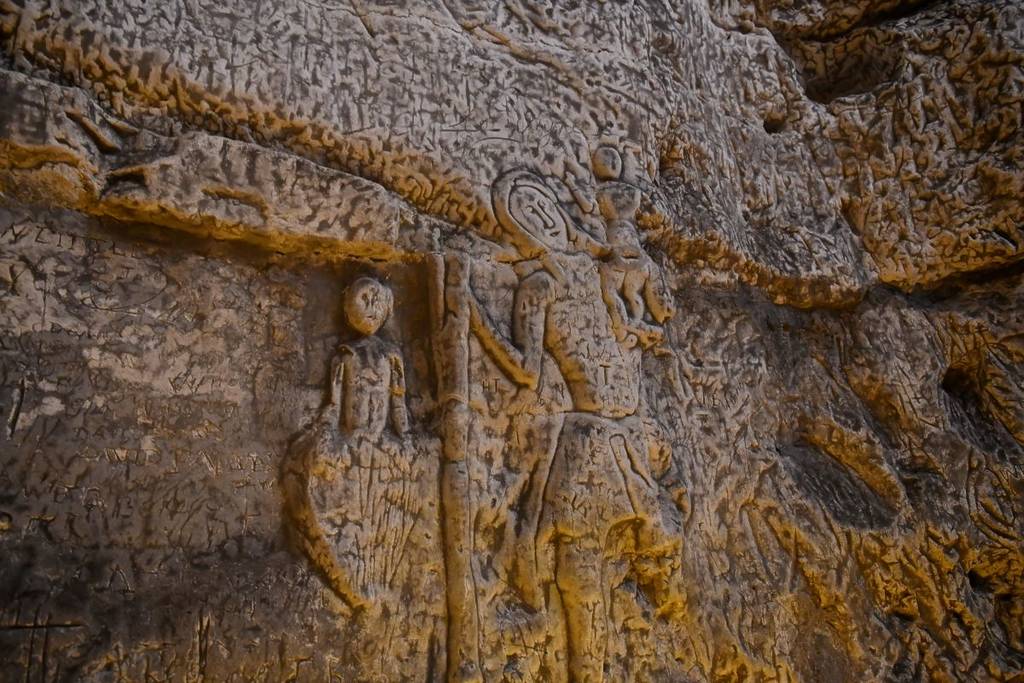
Fairly unassuming from the surface; you’d be forgiven for walking straight past the cave’s entrance, without giving it so much as a second glance. But we all know that it’s what’s on the inside that counts. And inside Royston Cave, you’ll find hundreds of intricate carvings lining the walls; all of which are completely unexplained.
Royston Cave was stumbled upon entirely by accident – as many good things are – when a group of workmen were building a bench in the butter market above it. A small boy was lowered into the newly-revealed shaft and discovered the cave. Once the subterranean site was cleared of earth and debris, a series of elaborate carvings were uncovered. And – well… the rest is history.
Originally, the cave was only accessible via a rope, but it wasn’t long before a visitor entrance was built so that more local people could have a nosey inside. Ownership of the cave passed through various hands over the following centuries, but in 1998, Royston Town Council bought the cave and started offering guided tours to the public.
Royston Cave is roughly 8-metres deep and stretches approximately 5-metres in diameter. Believed to be completely man-made, the cave is the shape of a beehive, and sits beneath the ancient crossroads formed at Ermine Street and Icknield Way in Royston. The carvings inside this chalk chamber are predominantly Christian in depiction and medieval in style – and are thought to have been created at some point in the mid-1300s. There’s the likes of swords, saints, and symbols etched into the walls – and there are a fair few scenes that seem to relate to the death and resurrection of Jesus.
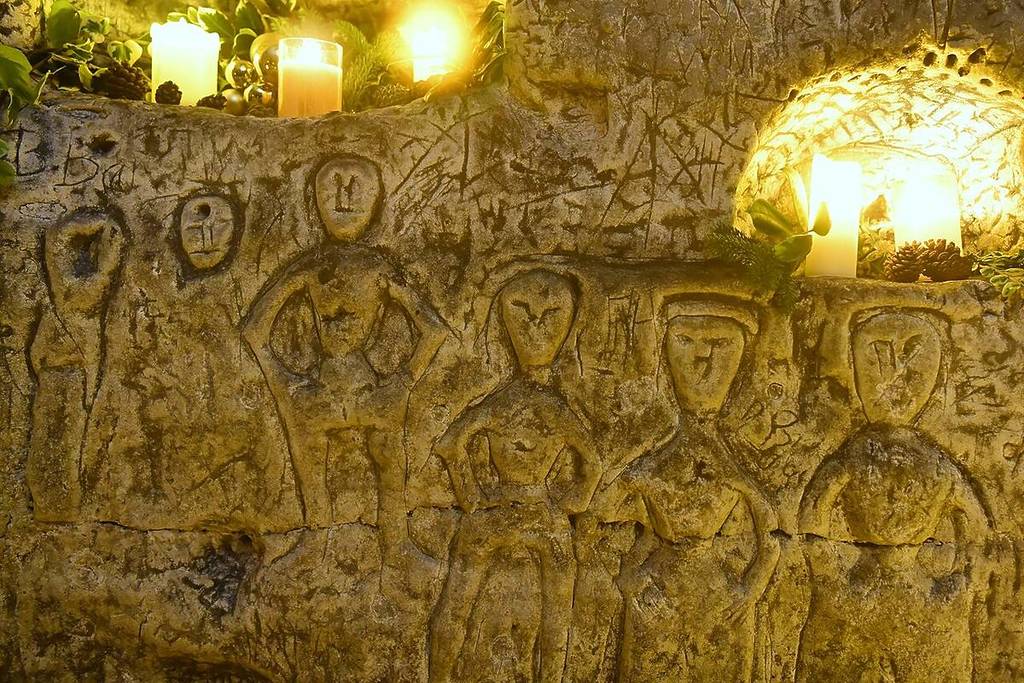
Royston Cave remains an enigma to this very day; drenched in myth and mystery. The unexplained carvings continue to baffle and bemuse visitors and historians. There has been plenty of speculation regarding the origin of this surreptitious site over the years, with people suggesting it could have been the likes of a Knights Templar or a Freemason’s Lodge. It’s highly likely that we’ll never find out the whos, whens, and whys of Royston Cave. But one thing is for certain, folks: it’s absolutely fascinating – and well worthy of a visit.
Getting to Royston Cave from London
Royston Cave is approximately a 90-minute drive from London, and there are several pay-and-display public car parks nearby. Non-drivers can hop on a speedy service from London King’s Cross to Royston (which takes just 38 minutes). Royston Cave is then just a 10 minute walk from the station.
Royston Cave’s public tour season runs until September 27, 2026. You can find out more, book your tickets, and plan your visit here.