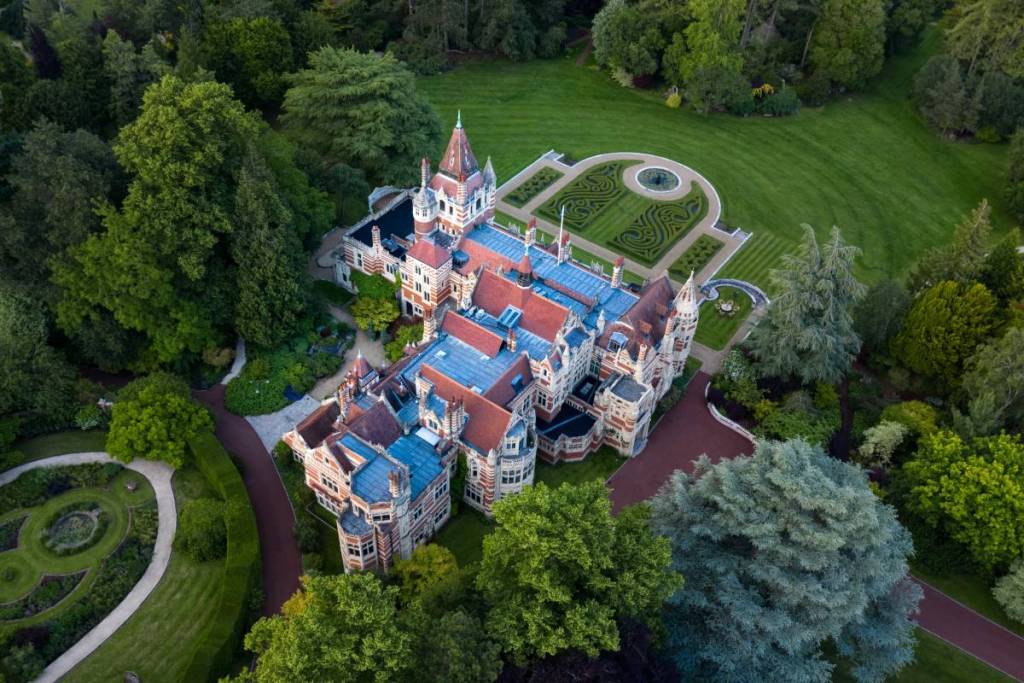

Set on 62 acres above Henley-on-Thames, the neo-Gothic mansion nicknamed “Crackerbox Palace” by George Harrison has since become a symbol of the ex-Beatle’s post-fame life.
George Harrison bought Friar Park, a neo-Gothic mansion built in the 1890s
When George Harrison bought Friar Park in January 1970, he wasn’t just buying a house, he was rescuing a Victorian mansion from the wrecking ball and turning it into one of Britain’s most storied celebrity estates.
Built in the 1890s for eccentric London lawyer Sir Frank Crisp, Friar Park was a sprawling weekend retreat packed with follies: secret passages, underground lakes, a 20ft replica of the Matterhorn, and hundreds of garden gnomes.
By 1970, however, the estate had fallen into such disrepair that it was reportedly a week away from demolition when Harrison stepped in, paying £140,000 for the mansion and grounds.
Inside Friar Park’s extraordinary gardens and grottoes
As Harrison began clearing the overgrown grounds, he uncovered Crisp’s whimsical vision: an Alpine rock garden crowned by a 20ft replica of the Matterhorn; underground passages and caves; a subterranean boating lake; distorting mirrors; and a multitude of colourful garden gnomes, some up to 3ft tall.
Harrison later recalled exploring the grotto by rope and hoist, describing the place as a mix of botanical garden, fairground, and “Wonderland.”
The gatehouse and ornate entrance set the tone for the estate’s Victorian Gothic character, which Harrison would spend the rest of his life restoring.
How George Harrison restored Friar Park
Harrison didn’t just hire a crew, he dug out weeds, clipped hedges, and threw himself into the physical work of revival, often alongside family and friends.
Details like the conical-roofed lodges and decorative chimneys reflect the idiosyncratic architecture that fascinated Harrison and informed the estate’s fairy-tale atmosphere.
Why George Harrison called Friar Park ‘Crackerbox Palace’
Harrison didn’t just restore the property; he made it part of his artistic identity. He set up a home studio in the mansion, recorded albums inspired by the grounds (including All Things Must Pass), and even named a song and, by extension, the estate “Crackerbox Palace” after a joke about a modest LA home that he repurposed for his own grand domain.
The gnomes became iconic too: four of them posed with Harrison on the All Things Must Pass cover, a visual nod to his new life outside The Beatles.
What happened to Friar Park after George Harrison’s death?
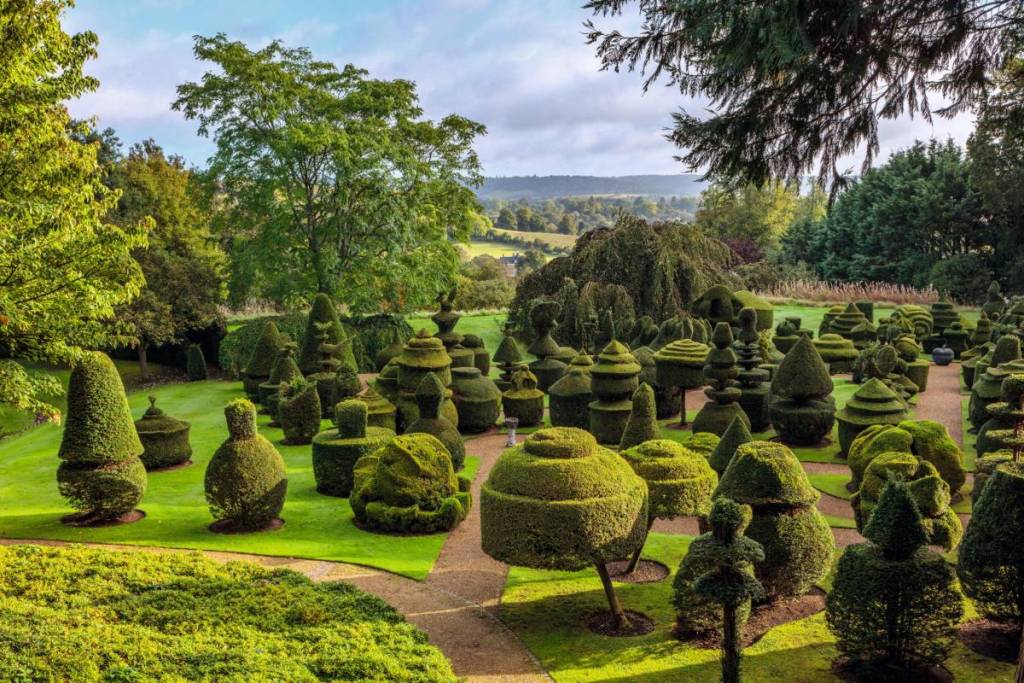
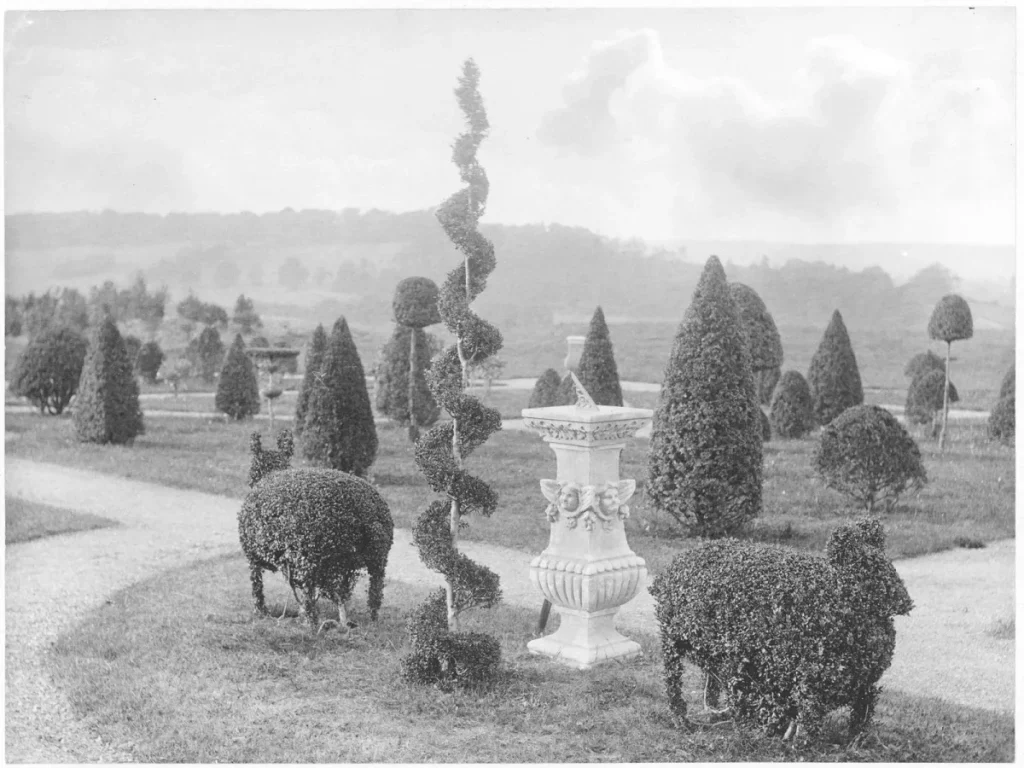
After Harrison’s death in 2001, his wife Olivia continued the restoration, enhancing planting schemes and bringing the topiary, dial garden, and rock garden back to full glory.
Until 1980, Friar Park was surprisingly open to the public, with fans allowed to wander the gardens.
After John Lennon’s murder, Harrison installed security fencing and closed the gates, transforming the estate into a tightly guarded private home.
Who owns George Harrison’s Friar Park today?
Today, the property is estimated to be worth around $40 million (£30m+), and remains in the hands of Harrison’s widow, Olivia, who has continued the restoration work since his death in 2001.
Friar Park isn’t frozen in time. In 2025, Harrison’s son Dhani secured planning permission to build a new two-bedroom oak-framed home on the grounds, sited on a disused tennis court and designed to honour his parents’ shared love of gardening.
Meanwhile, parts of the original estate have trickled onto the market: the former Upper Lodge, now Park House at Friar Park End, sold as a Grade II-listed three-bedroom home with a guide price of £1.397m.
Today, Friar Park remains privately owned by the Harrison family and is still celebrated as one of Britain’s most remarkable private gardens, a living testament to George’s late-life passion.