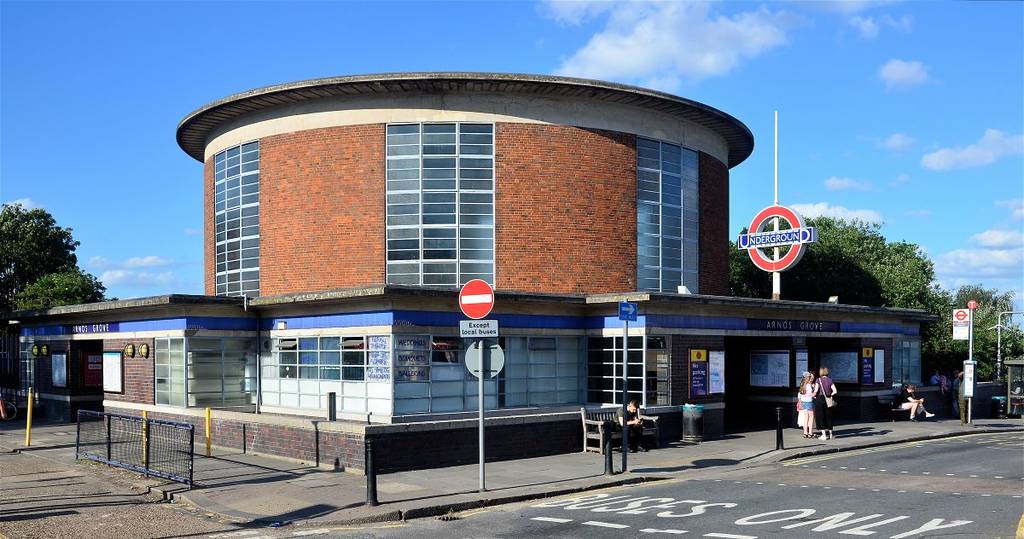
There are plenty of fascinating facts hidden amongst London’s labyrinth of tubes, tunnels, tracks, and ticket halls. One of which can be found over in North London in the form of a rather good-looking tube station that was designed to resemble a Swedish landmark. The station in question is Arnos Grove, a Grade II* listed spot perched on the Piccadilly Line. And if you’ve ever popped into the public library in Stockholm, Arnos Grove station might seem slightly familiar to you.
As you’re probably well aware, the London Underground is pretty darn old; dating all the way back to 1863. By the early to mid-1900s, there were already a fair few stations scattered around the city, so architects began to get a bit more creative with their designs. And an architectural-aficionado who was particularly innovative with his ideas was Charles Holden.
Charles Holden’s designs
Now, the name may ring a bell because Charles Holden was the trailblazing brains behind a rather hefty number of London tube stations. Holden was undeniably a master of his craft, with many of his designs still showcased and celebrated on the London Underground to this very day. But a lot of his ideas weren’t simply plucked from his brain; they were inspired and influenced by buildings that already existed.
Charles Holden and Frank Pick (the CEO of the London Transport Passenger Board) supposedly travelled around Europe together in search of inspiration for new station designs. There are plenty of examples dotted around London, one being Gants Hill; a stunning spot that was heavily influenced by Moscow’s grand Elektrozavodskaya Metro station. And another London station that was clearly inspired by a building that Holden and Pick saw on their travels is Arnos Grove.
The inspiration behind Arnos Grove station

Arnos Grove is thought to have been inspired by the Stockholm Public Library. The two buildings certainly have some similarities, with their tall cylindrical towers and long glass-paneled windows. The library is one of Sweden’s most notable landmarks and was built in 1928. Just four years later is when Arnos Grove set up shop, boasting some subtle(ish) nods towards the Stockholm structure.
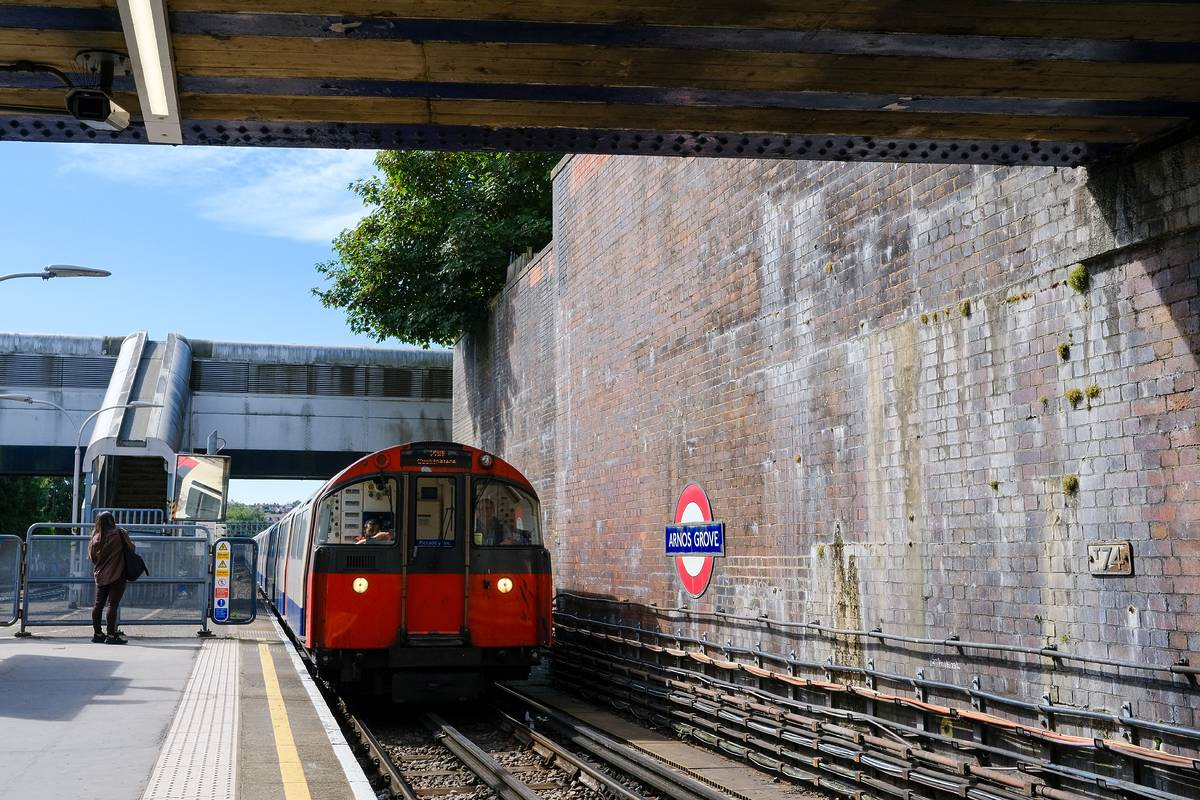
Arnos Grove is built from brick, glass, and reinforced concrete and also boasts a concrete bridge that stretches across the tracks. The station earnt itself Grade II listed status in 1971, but was bumped up to Grade II* listed in 2011. The station was also named among the world’s 12 Great Modern Buildings by the Guardian back in 2009. Not bad at all, hey?