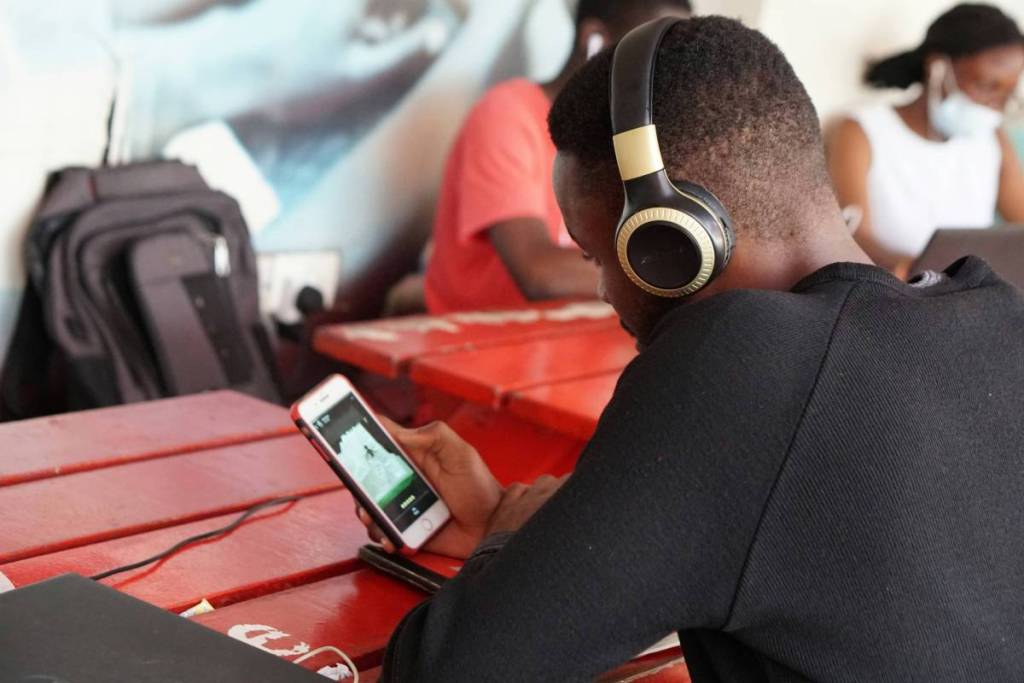

England is preparing to tighten its rules on mobile phones in schools, with pupils expected to lose access to their devices for the entire school day, not merely keep them out of sight.
Under updated government guidance, phones will no longer be allowed to remain in bags or pockets under “no see, no hear” policies, which currently allow devices to be carried if they are neither visible nor audible.
The stricter approach is due to come into force from September 2027 and will build on statutory guidance introduced in June, which already made schools and trusts legally responsible for maintaining phone-free environments throughout the day.
What is changing for mobile phones in English schools?
Under the current “no see, no hear” approach, pupils may keep phones in their bags as long as they do not use, display or audibly activate them.
The new rules are intended to remove that ambiguity by preventing pupils from having phones accessible in their bags or pockets during the school day.
Schools will retain flexibility over how they implement the policy. Some may use sealed magnetic pouches that pupils keep with them but cannot open during the day.
Others may require phones to be placed in secure lockers, collected at the start of the day, or banned from school premises altogether.
Education Secretary Lucy Powell said the message to parents and pupils is that “school is for learning and friendship, not scrolling.”
The government argues that constant access to phones risks distracting children from lessons and from face-to-face relationships.
Why England is tightening its school phone ban
Ministers and some school leaders believe that removing phones entirely can create a stronger school culture, rather than relying on staff to police occasional phone use.
The government says the change is designed to support concentration, reduce disruption and encourage pupils to interact more directly with one another.
Evidence from schools already using pouches suggests that the policy can change daily routines.
At Alsager School in Cheshire, pupils seal phones in pouches until home time; the headteacher reported that the school had become “noisier” because children were talking to each other again.
One pupil told the BBC that the pouches made it easier to concentrate because the phone was “out of sight, out of mind,” while another said fewer pupils were using phones in toilets during the school day.
Schools already adapting
Burnage Academy for Boys in Manchester has spent £20,000 on metal detectors and phone pouches.
Its head teacher, Karl Harrison, said that although some pupils initially felt they had lost freedom, locking phones away had increased social interaction and improved focus in lessons.
Other schools use different systems. Some collect devices at the start of the day, while others use lockers or prohibit phones from the site altogether.
In Cheshire, magnetically sealed pouches allow pupils to keep their phones with them while preventing access until staff unlock them at the end of the day.
What it means for pupils
For most pupils, the practical change will be that a phone cannot simply be kept in a bag as a fallback option. They are likely to have to hand it in, place it in a locker, or seal it in a pouch for the full school day.
Schools are expected to make exceptions where devices are needed for medical reasons, such as controlling an insulin pump. In such cases, pupils may use alternative secure storage arrangements rather than standard magnetic pouches.
The policy is separate from the UK’s planned ban on social media for under-16s, which is due to begin in March and would prevent children from accessing platforms including Instagram, Snapchat and TikTok.